
Table of Contents
TLDR
Custom flyer printing works best when the size fits the job, the layout stays easy to scan, and the message stays focused. A flyer does not need to say everything. It just needs to get the right person to notice it and take the next step.
Intent Sentence
This post helps businesses, event organizers, and marketers choose the right flyer setup by explaining size, design, and ordering choices, so they can print handouts that are clear, useful, and easy to distribute.
Custom flyer printing sounds simple, but it goes wrong in very predictable ways. A lot of flyers try to do too much at once. They try to be a menu, a brochure, a coupon, a company overview, and a sales pitch on one sheet of paper. That usually leads to cramped copy, weak hierarchy, and a piece that feels busy before anyone even starts reading.
The better approach is usually more restrained. A flyer should answer a few basic questions fast. What is this about. Why should I care. What should I do next. That could mean promoting a sale, announcing an event, listing services, sharing menu items, or adding a handout to outgoing orders. The use case can change a lot, but the structure usually should not.
Why Flyers Still Work
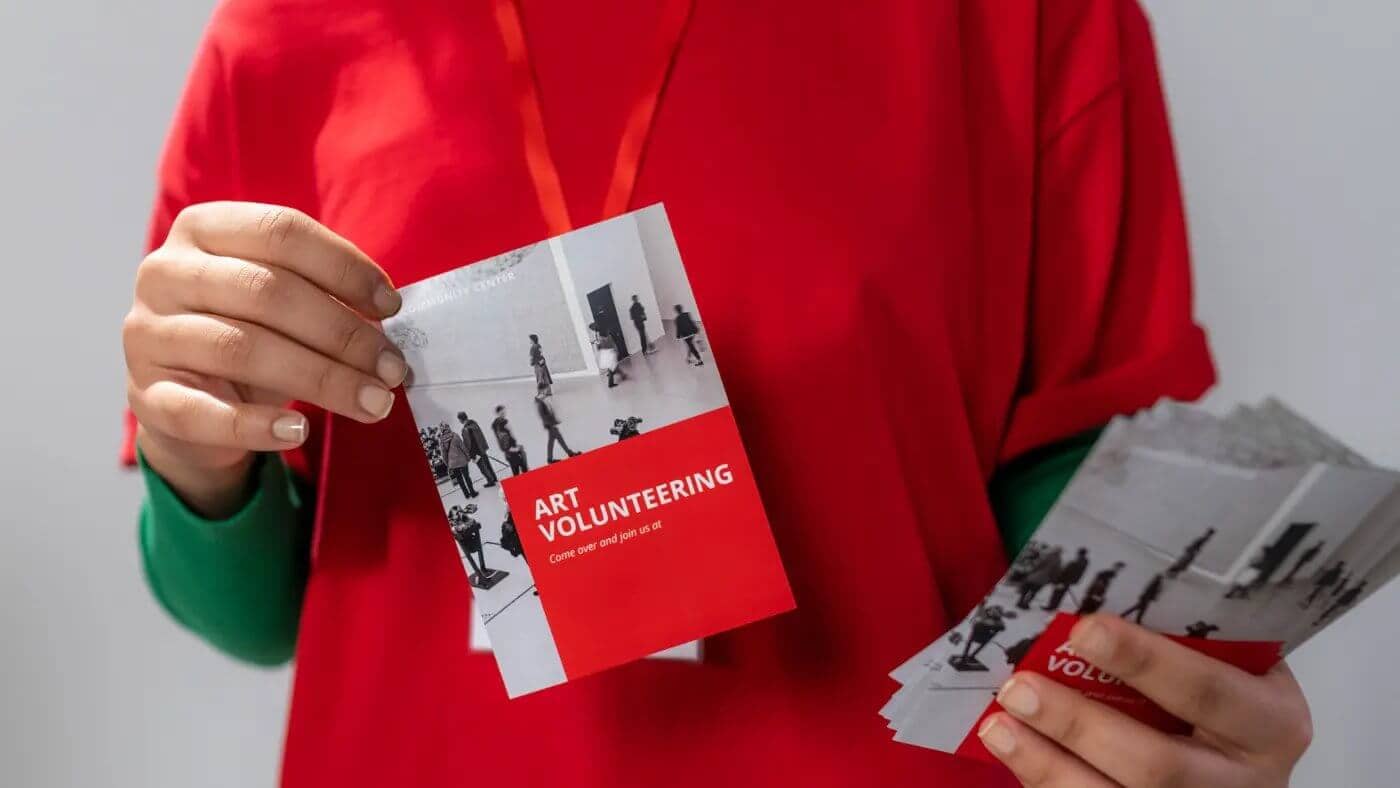
Flyers still work because they are easy to use in the real world. You can hand them out at a counter, stack them at an event table, leave them in a waiting room, tuck them into bags, or distribute them around a neighborhood without much friction. They are lightweight, affordable, and flexible enough to cover a lot of different jobs.
That is the real advantage of flyer printing. You get more room than a smaller promo piece, but you do not have to move all the way into brochure territory. A flyer can hold an offer, event details, a short service list, a few menu highlights, a QR code, or contact information without feeling overbuilt. On the CustomStickers product page, flyers are positioned for promotions, menus, events, announcements, and general handouts, which is exactly where this format tends to be strongest.
Custom Flyers | Full Color Flyer Printing
$16.00
Promote your business, event, product, or special offer with high-quality custom flyers printed in full color. Custom flyers are an affordable and effective way to share your message, build awareness, and get attention fast. By default, our flyers have a… read more

Choose The Size Based On How It Will Be Used
The best size for custom flyer printing depends less on what looks good on a screen and more on how the piece will actually be used. If someone will grab it, glance at it, and move on, smaller sizes usually make more sense. If the flyer needs lists, sections, or more detailed information, a larger format is usually the better fit.
Here are the standard sizes shown on the CustomStickers flyer page:
| Size | Best Fit |
|---|---|
| 4" x 6" | Quick promos, inserts, coupon-style handouts |
| 4.2" x 5.5" | Small announcements and event handouts |
| 5" x 7" | Compact promos with a bit more room |
| 5.5" x 8.5" | General-purpose flyer use |
| 8.5" x 11" | Menus, schedules, service lists, and detailed event pieces |
For a lot of businesses, 5.5" x 8.5" is the safest middle ground. It gives you enough room for a headline, one strong image, a few supporting points, and a clear call to action without feeling oversized. If the piece needs a lot more practical information, 8.5" x 11" usually works better. CustomStickers also notes that custom sizes up to 13 x 19 inches are available through support, which is useful when the standard options do not fit the job.
Keep The Layout Easy To Scan
Good custom flyer printing usually follows a very simple rule. The reader should understand the point of the piece in a few seconds.
That means the layout has to do part of the work. Most people do not study flyers. They scan them. A clean structure helps a lot. Start with one headline that tells people what the flyer is about. Follow it with a short support line, offer, or hook. Then give the most important details. End with one clear next step.
In most cases, a flyer only needs a few parts:
- one main headline
- one visual block or photo
- two to four short supporting points
- one main offer, event detail, or message
- one clear call to action
- contact information, a QR code, or both
That is usually enough. A restaurant flyer might lead with a special offer, show a few featured items, and end with a QR code for ordering. A local service flyer might lead with one seasonal hook, list three services, and end with one phone number and one booking path. When a flyer tries to behave like a catalog, it usually stops being effective as a flyer.
File Prep Matters More Than Most People Think
File prep is where custom flyer printing can either look sharp or fall apart. A design can seem fine on a monitor and still print poorly if the file is low resolution, missing bleed, or crowded too close to the trim.
The basic rules are not complicated, but they matter. Use strong artwork at final size. Keep text readable without forcing people to squint. If a color or photo is meant to run all the way to the edge, set up bleed so it can trim cleanly. And keep important elements away from the outer edge so the page does not feel cramped.
A few practical habits prevent most common problems:
- do not stretch low-quality web images
- avoid tiny body text
- keep contrast strong between text and background
- give logos and contact details some breathing room
- export a clean print-ready PDF when the file is final
This is not the glamorous part of the job, but it is often the part that separates a polished flyer from one that feels rushed.
Finish And Format Change The Feel
Finish matters in custom flyer printing because paper feel changes how the piece reads in real life. On the CustomStickers flyer page, matte is the default finish. Glossy and uncoated are available by request.
Matte is a practical default because it is easy to read and tends to reduce glare. Glossy can make color and photography look more vivid, which can be helpful for image-heavy pieces. Uncoated can make sense when someone may want to write on the flyer or when you want a softer paper feel.
This is also where it helps to think about whether a flyer is even the right format. If you need lighter paper, more room, and easy bulk distribution, a flyer usually makes sense. If you want thicker stock and a smaller, sturdier piece with a shorter message, a postcard may be the better fit. Neither one is better in general. They just solve different problems.
Order Based On The Distribution Plan
When you order custom flyer printing, it helps to think about distribution before you think about design details. That one decision usually shapes everything else.
Start with where the flyers will go. Event table, counter stack, packaging insert, neighborhood handout, menu handout, or community board placement all point toward slightly different choices. Once you know that, the right size becomes easier to choose. The amount of copy becomes easier to control. And the quantity becomes easier to estimate.
Custom flyer printing at Custom Stickers is quick and easy. Standard quantities run from 50 to 5,000 pieces. Free economy shipping is listed within the USA, with expedited options at checkout. The page also tells customers to leave a note if they need the order by a specific date. That is a simple setup, but for most buyers, simple is exactly what they need.
Conclusion
Custom flyer printing is one of the most practical printed marketing tools because it gives you room to say something useful without making the piece heavy, expensive, or hard to distribute. When the size fits the job, the layout stays clear, and the file is prepared correctly, flyers can do a lot of work.
The safest approach is usually the simplest one. Pick a size based on how the flyer will be used. Keep the message focused. Build a layout that can be understood fast. Choose the finish based on real use, not just preference. Then order the quantity that actually matches your distribution plan.
FAQs
What Are Custom Flyers Best Used For?
Custom flyers work well for business promotions, grand openings, restaurant menus, product launches, service lists, local advertising, event handouts, packaging inserts, and community announcements.
What Is The Best Size For A Flyer?
It depends on the job. Smaller flyers like 4" x 6" work well for short promos and inserts. Mid-size flyers like 5.5" x 8.5" are a strong general-purpose option. Larger flyers like 8.5" x 11" work better when you need menus, schedules, or more detailed information.
Are Flyers Better Than Postcards?
Not always. Flyers are usually the better pick for bulk distribution and more detailed messaging. Postcards are usually the better pick when you want thicker stock, a sturdier feel, or a simpler direct-mail style piece.
What Finish Do CustomStickers Flyers Come In?
Matte is the default finish. If you want glossy or uncoated flyers, CustomStickers says to contact support.
Can CustomStickers Print Custom Flyer Sizes?
Yes. The product page says custom sizes and quantities are available, with flyer sizes up to 13" x 19" through support.
Are Flyers Good For Bulk Printing?
Yes. Flyers are one of the most practical printed products for bulk runs because they are lighter, easier to distribute, and generally more cost-efficient than thicker promo pieces.