Table of Contents
- Why tool box stickers get wrecked so fast
- What “doesn’t scuff off” really means (it’s not magic)
- Materials that work for tool box stickers that don’t scuff off
- Lamination is the difference between “cool” and “still cool later”
- Adhesive and surface prep (the boring part that decides everything)
- Design choices that reduce edge wear and scuffing
- What to order from CustomStickers for tool boxes
- Bottom line
If you’ve ever slapped a sticker on a tool box, you know the emotional arc. Day 1: it looks awesome. Week 2: it’s scratched, grimy, and the corners are starting to look like they’ve been through a minor war. Tool boxes live a rough life. They slide around truck beds, rub against jobsite concrete, and get wiped down with whatever rag is closest.
So let’s talk about tool box stickers that don’t scuff off. What actually makes them hold up, what usually makes them fail, and how to order something that still looks good after the “real world” shows up.
Why tool box stickers get wrecked so fast
Tool boxes are basically scuff machines. Even if you’re careful, they’re constantly dealing with:
Abrasion: rubbing against other tools, straps, shelves, and your own hands.
Dust and grit: fine dirt acts like sandpaper when anything slides.
Chemicals: cleaners, degreasers, oils, WD-40 type stuff, and whatever mystery liquid ends up on the jobsite.
Impact and flex: lids slam, handles pull, boxes flex, corners get hit.
If your sticker is thin, unprotected, or has weak adhesive, it might look good for a minute, but it won’t stay looking good.
What “doesn’t scuff off” really means (it’s not magic)
When someone says they want tool box stickers that don’t scuff off, they’re usually talking about three things:
The face material (the film): what the sticker itself is made from.
The protection layer (laminate or overlaminate): what takes the abuse first.
The adhesive and bond: whether it actually stays put on powder coat, plastic, or textured surfaces.
You can have great print quality and still end up with a sticker that looks trashed if the protective layer is weak or the adhesive never bonded right.
Materials that work for tool box stickers that don’t scuff off
Here’s the practical breakdown.
Vinyl is the everyday workhorse
For most tool boxes, vinyl is the best balance of durability, flexibility, and cost. It handles daily handling well, it doesn’t feel flimsy, and it’s a solid choice for both metal and plastic tool boxes.
If you’re deciding between vinyl and label-style materials, this is worth a quick read: Sticker Materials: Vinyl vs BOPP Comparison
Polyester is the “industrial label” vibe
If you’ve ever seen tough asset tags or equipment ID labels, a lot of those are polyester (PET). Polyester films are commonly used in industrial environments because they hold up well and can be paired with very scuff-resistant overlaminates.
If your tool boxes get hit with solvents and constant abrasion, polyester-based constructions can be a good direction. (And yes, it’s a little more “factory label” than “fun sticker,” but sometimes that’s the point.)
BOPP is better for packaging, not abuse
BOPP has its place, especially for product labels and packaging. But for a tool box that gets dragged around, it’s usually not the first pick.
Paper is a “don’t do that” situation
Paper stickers on a tool box are basically a science experiment. They’ll absorb grime, scuff instantly, and look sad fast.
Lamination is the dif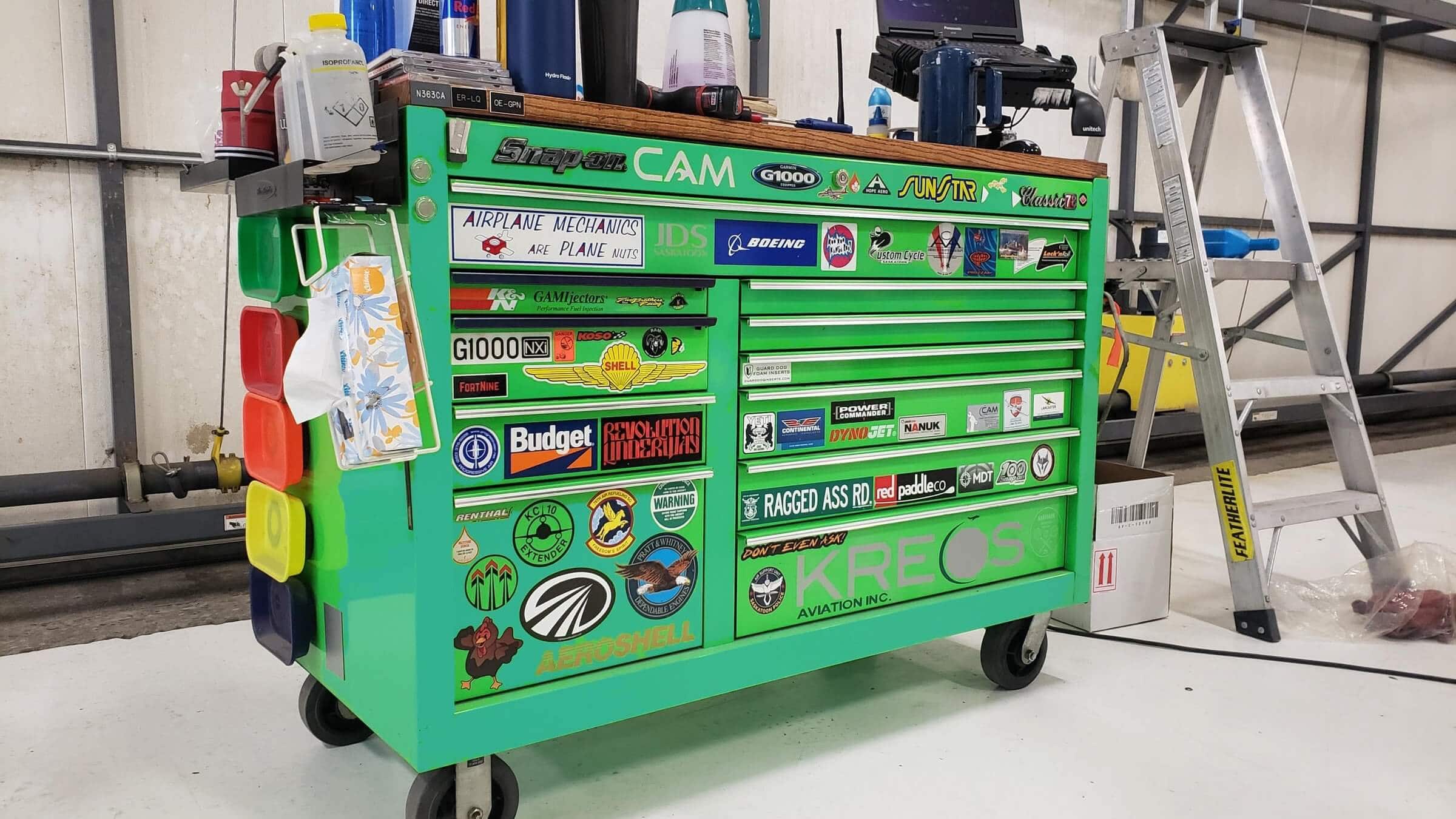 ference between “cool” and “still cool later”
If you want tool box stickers that don’t scuff off, lamination is not optional. It’s the sacrificial layer that takes the scratches, blocks a lot of chemical contact, and keeps the ink from getting worn down.
On CustomStickers, our standard approach is simple: we use durable vinyl and pair it with a protective laminate so the printed surface is shielded from scratches and weather.
If you want the deeper explanation of why lamination matters (and when it matters most), check this: Is Lamination Needed for Outdoor Stickers?
Matte vs gloss for tool boxes
Both can work. Here’s the real-world difference:
Gloss laminate: tends to look brighter and “pop” more. It also wipes clean easily.
Matte laminate: hides fingerprints better and can make small scuffs less noticeable. It’s also easier to read under harsh lighting (shop lights can be brutal).
If your tool box lives under fluorescent lights and gets handled all day, matte is honestly a great default.
Adhesive and surface prep (the boring part that decides everything)
A lot of “my sticker failed” stories are not about the sticker. They’re about oil, dust, and a rushed application.
Tool boxes are often:
powder-coated metal (pretty good for adhesion when clean)
textured plastic (can be harder)
lightly oily (even when it doesn’t look oily)
Here’s the routine that keeps you out of trouble:
Clean like you mean it
Use soap and water first if it’s dirty, then wipe with isopropyl alcohol on a lint-free cloth. The goal is a surface that’s clean and dry, not “clean-ish.”
Avoid ammonia-based glass cleaners. They can leave residues that mess with adhesion on some films.
Apply with pressure, not hope
Pressure-sensitive adhesives need firm pressure. Use your thumb, a squeegee, or even the back of a spoon. Pay extra attention to edges.
Give it time
Adhesives build bond strength over time. If you slap a sticker on and immediately start dragging the box across a truck bed, you’re stress-testing the edges before the adhesive finishes settling in.
Design choices that reduce edge wear and scuffing
This stuff sounds small, but it matters.
Rounded corners last longer
Sharp corners catch and lift. Rounded corners take longer to peel and they don’t get “picked” as easily by accident.
Leave some breathing room in the design
If your design has fine detail right on the edge, scuffing will make it look rough faster. A little margin helps the sticker age better.
Think about where it goes on the box
Stickers on flat panels tend to last longer than stickers placed right on corners, hinges, or textured ribs. If you want it to stay clean, put it where hands and straps don’t constantly rub.
What to order from CustomStickers for tool boxes
If you’re ordering for a crew, a shop, or just because you’re tired of your stuff walking off at the jobsite, this is what I’d pick:
Laminated vinyl stickers for most tool boxes and general use.
Matte laminate if you want a clean, low-glare look that hides handling marks.
Gloss laminate if you want the most vibrant look and easy wipe-down.
Die cut with rounded corners for anything that’s going to get grabbed a lot.
And if your goal is truly tool box stickers that don’t scuff off, be honest about the environment. If it’s constant chemical exposure, heavy abrasion, or oily surfaces, say so. We can point you toward the right construction so you’re not re-ordering the same sticker every month out of pure annoyance.
Bottom line
Tool boxes are hard on stickers. That’s normal. But you can absolutely get tool box stickers that don’t scuff off in normal daily use if you choose the right material, add protective lamination, and do basic surface prep.
If your last sticker turned into a scratched-up ghost of itself, it probably wasn’t “bad luck.” It was a material or protection issue. Fix that, and your stickers stop looking like they’ve been through a belt sander.