Table of Contents
- TLDR
- Why Custom Labels For Baked Goods Matter
- What To Put On A Baked Goods Label
- Ingredient And Allergen Information
- Custom Labels For Baked Goods And Cottage Food Sales
- Best Label Materials For Bakery Packaging
- Roll Labels Vs Sheet Labels
- Bakery Label Design Tips
- Label Sizes For Common Baked Goods
- Date Labels, Batch Labels And Storage Instructions
- Using Labels For Seasonal Bakery Packaging
- Common Bakery Label Mistakes
- Conclusion
- FAQs
TLDR
- Custom labels for baked goods help cookies, cakes, breads and pastries look more polished and easier to sell.
- Custom labels for baked goods should balance branding, product details, ingredients, allergens and practical packaging needs.
- Roll labels are usually best for repeated packaging, while sheet labels can work well for small batches or seasonal items.
- Labels should go on packaging, not directly on unpackaged food unless the material is specifically approved for that use.
- Before selling packaged baked goods, check federal, state and local food labeling rules.
A chocolate chip cookie can taste incredible and still look unfinished if it is sitting in a plain bag with no label. That is the quiet power of packaging. Custom labels for baked goods do not make the cookie better, but they do make the product easier to trust, easier to gift and easier to remember.
For home bakers, cottage food sellers, bakeries, cafes, farmers market vendors and small food brands, custom labels for baked goods do a lot of work in a small space. They carry the logo. They explain what the product is. They can list ingredients, allergens, weight, flavor, date information and storage instructions. And when the design is done well, they make a simple box of brownies feel like something worth buying.
Why Custom Labels For Baked Goods Matter
Custom labels for baked goods are not just decoration. They help customers understand what they are buying.
That matters because baked goods are often sold in simple packaging: clear bags, kraft boxes, clamshell containers, jars, sleeves, tins and bakery cartons. Without a label, those packages can feel generic. With the right label, they become a finished product.
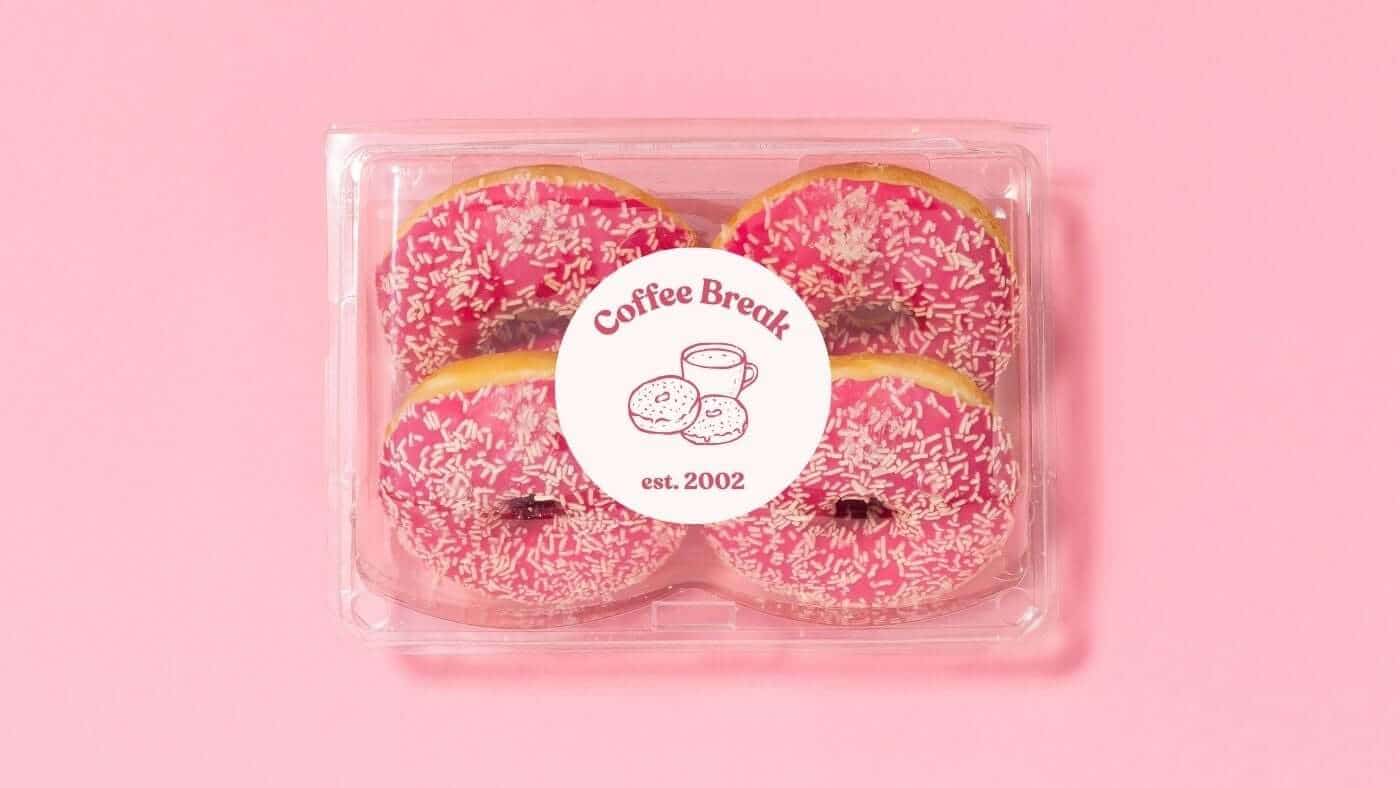
Custom labels for baked goods can help with brand recognition, product names, flavors, ingredients, allergens, best-by dates, pricing, barcodes, gift packaging and tamper-evident seals. That is a lot of work for one small piece of packaging.
This is especially useful for smaller bakeries. You may not have custom-printed boxes yet. You may be using stock bags or standard bakery boxes. Custom labels let you make that packaging look branded without ordering custom packaging for every product size.
What To Put On A Baked Goods Label
A label for baked goods should start with the basics. The exact requirements depend on where and how you sell, but most bakery product labels need some combination of product name, brand name, net weight, ingredients, allergens, business information, date information, storage instructions and sometimes a Nutrition Facts panel.
Not every product needs the same label. A custom cookie favor for a wedding may need a different label than a packaged retail brownie sold through a local shop. But the more public and retail-oriented the product is, the more important clear information becomes.
Custom labels for baked goods should be designed around two jobs: helping the customer and supporting compliance. A beautiful label that leaves out important information can create problems later.
A simple front label might include the bakery logo, product name and flavor. A back or bottom label can hold ingredients, allergens, net weight, date information and required statements. This keeps the front clean while still giving customers what they need. In short, custom labels for baked goods should make the answer obvious before a customer has to ask.
Ingredient And Allergen Information
Baked goods often contain common allergens. Wheat, milk, eggs, soy, peanuts, tree nuts and sesame can all show up in bakery products. Even a simple chocolate chip cookie may include wheat, milk, eggs and soy depending on the recipe and chocolate used.
Ingredient lists are usually written in descending order by weight. That means the ingredient used the most goes first. If a product contains major allergens, those allergens need to be identified clearly under applicable food labeling rules.
For a small bakery, this is one of the most important parts of custom labels for baked goods. Customers with allergies read labels carefully. Parents read labels carefully. Retailers read labels carefully. And if you sell packaged baked goods, unclear allergen information can create avoidable risk.
A simple example might look like this:
Ingredients: Wheat flour, sugar, butter, chocolate chips, eggs, vanilla extract, baking soda, salt. Contains: Wheat, milk, eggs, soy.
The best custom labels for baked goods keep this information plain and easy to scan. That example is not a universal template. Your real label should match your exact recipe and ingredient sources. If your chocolate chips contain soy lecithin, that matters. If you use almond flour, that matters. If sesame is present in the product, that matters too.
Custom Labels For Baked Goods And Cottage Food Sales
Many small bakers start under cottage food laws. These rules can allow certain foods to be made in a home kitchen and sold directly to customers, but the details vary by state.
That matters for custom labels for baked goods because cottage food labels often need specific wording. Some states require a statement saying the product was made in a home kitchen. Some require the producer’s name and address. Some limit where the food can be sold. Some treat farmers markets, online sales, shipping and retail stores differently.
Before printing a large batch of custom labels for baked goods, check your state’s cottage food rules or contact your local health department. It is much easier to adjust a label before printing than to realize after the fact that a required line is missing.
A good practical move is to build your label in two parts. Use a branded front label for the logo, product name and design. Use a back or bottom label for ingredients, allergens, net weight, date information and any required cottage food statement.
Best Label Materials For Bakery Packaging
For most bakery packaging, the label is applied to a bag, box, jar, clamshell or paper sleeve. It should not touch unpackaged food unless the label material and adhesive are approved for direct food contact.
That distinction matters. A label on the outside of a cookie bag is different from a label stuck directly to a bare cookie, pastry or piece of chocolate.
Custom labels for baked goods usually need good adhesion to paper, plastic or cardboard. They also need clean print quality for small text, a finish that matches the package and enough durability for normal handling. If the product will be refrigerated or exposed to condensation, the label material matters even more. In those cases, custom labels for baked goods need to handle more than dry shelf packaging.
Gloss labels can make colors look brighter and more saturated. Matte labels can feel softer and more natural, especially on kraft boxes, parchment-style packaging or rustic bakery branding. Clear labels can look clean on jars, clamshells or transparent bags, but the design needs enough contrast to stay readable.
For repeated bakery packaging, custom labels from CustomStickers.com are a practical fit because you can upload your artwork, choose your size, quantity and finish, then review a proof before production.
Roll Labels Vs Sheet Labels
The best label format depends on how you package your baked goods.
Roll labels are usually the better choice when you are applying the same label over and over. They are easier to store, easier to organize and faster to apply by hand or with a label dispenser. This works well for cookie bags, bread bags, bakery boxes, cake jars, granola bags and repeated retail packaging.
Sheet labels can be better for smaller runs, flavor tests, seasonal labels or hand-applied projects where speed is less important. They are easy to peel and can be convenient when you only need a few of each design.
For most bakery production, custom labels for baked goods are easiest to manage on rolls once the design is finalized. If you are still testing flavors, names or packaging sizes, start with a smaller run first. Think of custom labels for baked goods as part of your packaging workflow, not just the final decoration.
| Packaging Need | Better Label Choice |
|---|---|
| Weekly bakery production | Roll labels |
| Farmers market packaging | Roll labels |
| Seasonal flavors | Sheet labels or short-run labels |
| Wedding favor cookies | Sheet labels |
| Retail product line | Roll labels |
| Testing a new recipe | Sheet labels |
| High-volume packaging | Roll labels |
If you already know the design will be used often, start with roll labels. If you are still experimenting, keep the first run smaller.
Bakery Label Design Tips
Bakery labels need to look good, but they also need to be readable. A beautiful label that hides the flavor or ingredients is not doing its job.
Start with the product name. Customers should know what the baked good is without guessing. “Salted Brown Butter Chocolate Chip Cookie” tells a better story than “Cookie,” but it still needs to be easy to read.
Use contrast. Light tan text on a kraft-colored label may look nice on screen but disappear in real life. Small cursive fonts can also become hard to read when printed at label size.
Custom labels for baked goods should make the product feel polished without burying the basics. Keep the logo visible, but do not let it overpower the product name, flavor or required information.
A strong bakery label usually includes a clear product name, readable flavor, simple logo placement, one or two brand colors, enough blank space and a legible ingredient area. If the label has to include a lot of required information, use a second label on the back or bottom of the package. Well-designed custom labels for baked goods make the package feel clean without making customers hunt for details.
Label Sizes For Common Baked Goods
The right label size depends on the packaging, not just the design. Custom labels for baked goods should match the container first and the artwork second.
A 2-inch circle label can work well on cookie bags, small boxes, jars and bakery seals. A 3-inch label can work better when you need more branding space or ingredient text. Rectangular labels are often better for ingredient panels, bread bags, brownie boxes and clamshell containers.
Custom labels for baked goods should be sized after you choose the package. A label that works on a cookie bag may be too small for a cake box or too large for a macaron sleeve.
Common starting points include 2-inch circle labels for cookie bags, 2.5-inch or 3-inch labels for larger treat bags, rectangle labels for bread bags and ingredient panels, clear labels for jars and slim rectangle labels for macaron boxes.
Before ordering, print the label size on plain paper and place it on the actual package. This quick test catches problems before production. A label that looks large on screen may feel tiny on a bakery box.
Date Labels, Batch Labels And Storage Instructions
Freshness matters with baked goods. Even when a label is mainly for branding, it helps to leave room for date information.
Depending on the product, you might use baked on, best by, sell by, freeze by, lot number or batch number. This can be printed directly on the label if every product in the run is the same. For rotating batches, leave a small blank area where you can write or stamp the date.
Custom labels for baked goods can also include storage instructions. “Store in a cool, dry place,” “Refrigerate after opening” or “Best enjoyed within 3 days” gives the customer practical guidance. It also makes the product feel more professional.
Using Labels For Seasonal Bakery Packaging
One of the best parts of custom bakery labels is how easy they make seasonal packaging.
You can keep the same box, bag or jar and change the label for holidays, weddings, corporate gifts, school fundraisers or limited flavors. That is much easier than ordering a new packaging format every time.
Custom labels for baked goods work especially well for Valentine’s Day cookie labels, Easter treat labels, Halloween brownie labels, Thanksgiving pie labels, Christmas cookie boxes, wedding favor labels, baby shower dessert labels, corporate gift boxes and farmers market seasonal flavors.
Seasonal custom labels for baked goods are also useful for testing limited-time flavors before committing to a permanent package. This is where a small bakery can look much bigger. The packaging feels intentional even if the container is simple.
Common Bakery Label Mistakes
The biggest mistake is making the label too pretty and not useful enough.
Customers need to know what the product is. They need to understand the flavor. If there are allergens, they need to see them clearly. If the product needs refrigeration, the label should not hide that information.
Other common mistakes include text that is too small, low contrast, missing ingredient information, missing allergen information, labels that do not stick well, glossy labels with too much glare, labels that are too large for the package and required information placed over folds, seams or curves.
Custom labels for baked goods should always be tested on the real package before ordering a large batch. Hold the package in your hand. Put it under normal store or kitchen lighting. Read it from the distance a customer would actually see it.
Conclusion
Custom labels for baked goods help small bakeries and food brands turn simple packaging into something clear, branded and ready to sell. They make cookies, cakes, breads, brownies and pastries easier to identify, easier to gift and easier to trust.
The best custom labels for baked goods do more than look nice. They explain the product, support food labeling needs, fit the packaging and hold up through normal handling. For most bakeries, that means choosing the right size, using readable artwork, planning for ingredients and allergens, then testing the label on the actual bag, box or jar before scaling up.
A good baked good gets the customer’s attention. A good label helps the customer feel confident buying it. That is the real job of custom labels for baked goods.
FAQs
What Are The Best Custom Labels For Baked Goods?
The best custom labels for baked goods fit the package, stick well, stay readable and include the right product information. Roll labels are usually best for repeated bakery packaging, while sheet labels can work well for smaller batches.
Can I Put Labels Directly On Food?
Do not put standard product labels directly on unpackaged food unless the label material and adhesive are specifically approved for direct food contact. Most bakery labels should go on bags, boxes, wrappers, jars or other packaging.
What Size Label Is Best For Cookie Bags?
A 2-inch circle label is a common starting point for cookie bags. Larger bags or labels with ingredients may need a 2.5-inch, 3-inch or rectangular label.
Do Bakery Labels Need Ingredients?
Packaged baked goods often need ingredient information, but requirements depend on where and how the product is sold. Check federal, state and local rules before printing labels for retail sales.
Should Bakery Labels Be Glossy Or Matte?
Glossy labels can make colors look brighter. Matte labels often work well for rustic, handmade or kraft-style bakery packaging. The best choice depends on the brand style and package material.
Are Roll Labels Better For Bakeries?
Roll labels are usually better for bakeries that apply the same label to many packages. They are easy to store, organize and apply quickly, especially for repeated production.