
Table of Contents
- TLDR
- What Are Direct To Film T Shirt Transfers?
- How Direct To Film T Shirt Transfers Work
- Why DTF Transfers Are Popular For Custom Shirts
- DTF Vs Screen Printing, DTG, HTV And Sublimation
- Best Uses For Direct To Film T Shirt Transfers
- Where Direct To Film T Shirt Transfers Can Fall Short
- Artwork Prep For Better DTF Results
- Choosing Shirts For DTF Transfers
- Washing And Caring For DTF Shirts
- A Simple Decision Guide
- How Stickers Fit Into The Same Merch Drop
- Conclusion
- FAQs
TLDR
Direct to film t shirt transfers are full-color designs printed onto film, coated with adhesive powder, cured and heat-pressed onto apparel.
Direct to film t shirt transfers are a strong fit for small batches, detailed artwork, dark shirts and custom merch.
DTF is usually more flexible than DTG across cotton, polyester and blended fabrics.
Screen printing still makes sense for large bulk orders with simple artwork.
Good artwork, correct press settings and simple wash care make a big difference.
Direct to film t shirt transfers have become popular because they solve a real apparel problem: people want colorful shirts without committing to a huge screen-printed run.
That matters for creators, small businesses, school events, family reunions, sports teams and local brands. Direct to film t shirt transfers let you print detailed logos, illustrations and merch designs in smaller quantities while still getting a clean, finished shirt.
What Are Direct To Film T Shirt Transfers?
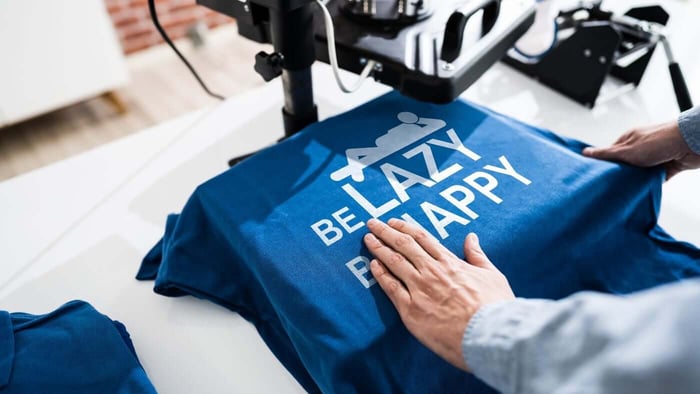
Direct to film t shirt transfers, usually shortened to DTF transfers, are printed designs made on a special transfer film. The design is printed in reverse, backed with white ink when needed, coated with hot-melt adhesive powder, cured and then applied to a shirt with a heat press.
The finished print sits on top of the fabric. That makes DTF different from DTG printing, where ink is printed directly into the garment. It is also different from heat transfer vinyl, where simple shapes are cut from colored vinyl and weeded by hand.
DTF transfers sit in a useful middle ground. They can handle detailed full-color artwork, but they also work on many garment types, including cotton, polyester and blends.
How Direct To Film T Shirt Transfers Work
The exact setup depends on the printer, film, adhesive powder and heat press, but the basic process is simple to understand.
First, the artwork is prepared at the correct print size. Then the design is printed onto transfer film. A white ink layer is added behind the color layer when the shirt color requires it. Adhesive powder is applied to the wet ink. The transfer is cured with heat so the adhesive is ready to bond. Finally, the transfer is pressed onto the shirt using the right time, temperature and pressure.
Some DTF films are hot peel. Others are cold peel. Some transfers also need a short second press after peeling to improve feel and durability.
The practical takeaway is simple: direct to film t shirt transfers are only as good as the artwork, transfer quality and heat press process behind them.
Why DTF Transfers Are Popular For Custom Shirts
DTF transfers are popular because they remove several setup headaches.
You do not need a separate screen for each ink color. That makes DTF useful for gradients, photos, character art, detailed logos and designs with lots of small color changes. A design that would be slow or expensive to screen print can often be produced more flexibly with DTF.
They also work well on dark garments. The white ink backing gives the color layer a clean base, so a bright design can still stand out on black, navy or forest green shirts.
DTF is also friendly to small runs. A creator can test one shirt design, order a small batch for an event or produce several designs without committing to hundreds of pieces. That lower inventory risk is one of the main reasons DTF has taken off.
Custom DTF Transfers | T-Shirt Transfers

$11.99
Bring your artwork to life with vibrant, full-color prints that press cleanly onto cotton, polyester, and blends. Our custom DTF transfers deliver sharp detail, smooth gradients, and a flexible finish that holds up after washing. Perfect for merch drops, team… read more
DTF Vs Screen Printing, DTG, HTV And Sublimation
No shirt printing method wins every job. Direct to film t shirt transfers are best when the design is colorful, detailed or ordered in a smaller quantity.
Screen printing is often better for large runs with simple designs. Once the screens are made, bulk production can be efficient. The tradeoff is setup. More colors usually mean more screens and more cost.
DTG printing can feel softer on cotton because the ink goes directly into the garment. But DTG is more limited by fabric type, pretreatment and garment color. DTF is often easier across mixed apparel.
Heat transfer vinyl is useful for names, numbers and simple cut graphics. It is not the best choice for detailed full-color artwork.
Sublimation works well on light polyester garments, especially for all-over color or performance apparel. But it is not a universal T-shirt printing method.
That is the clean decision point. Use DTF transfers when you want full color, flexible quantities and broad garment compatibility.
Best Uses For Direct To Film T Shirt Transfers
DTF transfers make sense for projects where flexibility matters more than traditional bulk setup.
They are a good fit for creator merch, small business shirts, event shirts, school club apparel, hoodie designs, team shirts, limited drops and test runs before a larger order.
They are also useful for designs with many colors. If your artwork has a mascot, a colorful logo, a detailed illustration or a textured graphic, DTF can keep the setup easier than screen printing.
The same logic applies to mixed shirt colors. DTF transfers can be pressed onto several garment colors without rebuilding the whole job each time, though you should still check contrast against each shirt color.
Where Direct To Film T Shirt Transfers Can Fall Short
DTF has real advantages, but it is not perfect.
The biggest tradeoff is feel. Because the design sits on top of the shirt, large solid prints can feel heavier than DTG or some screen-printed designs. A small left-chest logo may feel light. A full front rectangle of ink may feel less breathable.
Application quality also matters. Poor pressure, incorrect temperature or rushed peeling can lead to weak adhesion, rough texture or early cracking. That is usually a process problem, not proof that DTF is bad.
Cheap transfers can create problems too. Low-quality film, uneven powder, weak curing or messy artwork can leave rough edges and muddy details. Direct to film t shirt transfers are flexible, but they still need clean production.
Artwork Prep For Better DTF Results
Good DTF starts with good artwork. A heat press cannot fix a blurry file.
Use a transparent background unless the design intentionally needs a box or shape behind it. Build the artwork at the final print size. Aim for about 300 PPI for raster artwork at final size. Use vector files for logos when possible. Remove stray pixels, rough edges and leftover background artifacts.
Also think about shirt color. A design that looks strong on white may need changes for black or navy. The white ink backing helps, but it does not replace good contrast.
Tiny text is another common issue. Direct to film t shirt transfers can hold detail, but small text still has to be readable on fabric. If the shirt will be viewed from a few feet away, design for that distance.
Choosing Shirts For DTF Transfers
Direct to film t shirt transfers can work on cotton, polyester, cotton-poly blends, hoodies and some performance garments. The garment still affects the result.
Smooth cotton shirts are a common choice because they feel familiar and press cleanly. Cotton-poly blends can be a good middle option for softness and durability. Polyester is common for sportswear and uniforms, but it can be more heat-sensitive.
Texture matters too. A smooth T-shirt gives the transfer a cleaner surface than thick fleece or heavily ribbed fabric. Hoodies can look great, but seams, pockets and garment thickness make pressing more important.
A good print on a bad blank still feels like a bad shirt. Choose the shirt carefully.
Washing And Caring For DTF Shirts
Direct to film t shirt transfers hold up best when the shirt is washed with basic care.
Wait 24 hours before the first wash when possible. Wash inside out in cold water. Use mild detergent. Avoid bleach, harsh cleaners and fabric softener. Air dry when you can, or tumble dry low. Do not iron directly on the print.
That is not complicated. It is the same care routine you would use for most decorated apparel you want to keep looking good.
A Simple Decision Guide
Choose direct to film t shirt transfers if you want full-color artwork, small batches, dark shirts, mixed garment colors or several designs without screen setup.
Choose screen printing if you have a simple design and a large quantity.
Choose DTG if you are printing mostly on cotton and want a softer print for certain designs.
Choose HTV for names, numbers and simple one-color graphics.
Choose sublimation for light polyester garments designed for that process.
For most small merch drops, direct to film t shirt transfers are one of the easiest options to test first.
A good rule: let the artwork and quantity make the decision. Do not pick a print method only because it sounds newer. Pick the method that fits the garment, the design and the number of shirts you actually need.
How Stickers Fit Into The Same Merch Drop
T-shirts are strong merch, but they are not the only piece of a good launch. Stickers are easier to hand out, easier to ship and easier to include as a bonus.
At CustomStickers.com, custom stickers can pair with a DTF shirt drop as packaging stickers, thank-you inserts, event giveaways or matching designs for laptops and water bottles. A shirt has to fit. A sticker just needs a design people want to keep.
That makes stickers a practical add-on for creators, small businesses and event merch. The shirt becomes the main product. The sticker makes the package feel more complete.
Conclusion
Direct to film t shirt transfers are useful because they make full-color custom apparel easier to produce in flexible quantities. They are especially strong for small batches, dark shirts, detailed artwork and merch tests.
They are not the best answer for every project. Screen printing, DTG, HTV and sublimation all have their place. But for many modern custom shirt projects, direct to film t shirt transfers are the option that balances detail, flexibility and practical setup.
If you are planning a merch drop, think beyond the shirt. A good DTF design can become a sticker, package insert or event giveaway too. That gives the artwork more places to work.
FAQs
Are Direct To Film T Shirt Transfers Durable?
Yes. Direct to film t shirt transfers can be durable when the transfer is made well, pressed correctly and washed with basic care.
Do Direct To Film T Shirt Transfers Work On Cotton?
Yes. Direct to film t shirt transfers are commonly used on cotton shirts, polyester shirts and cotton-poly blends.
Are DTF Transfers Better Than Screen Printing?
DTF is usually better for small batches and colorful designs. Screen printing is usually better for large runs with simple artwork.
Do DTF Prints Feel Heavy?
They can, especially when the design is large and solid. Smaller designs and artwork with open space usually feel better.
What File Type Is Best For DTF Transfers?
Vector files are best for logos. High-resolution PNG files with transparent backgrounds can also work well for raster artwork.