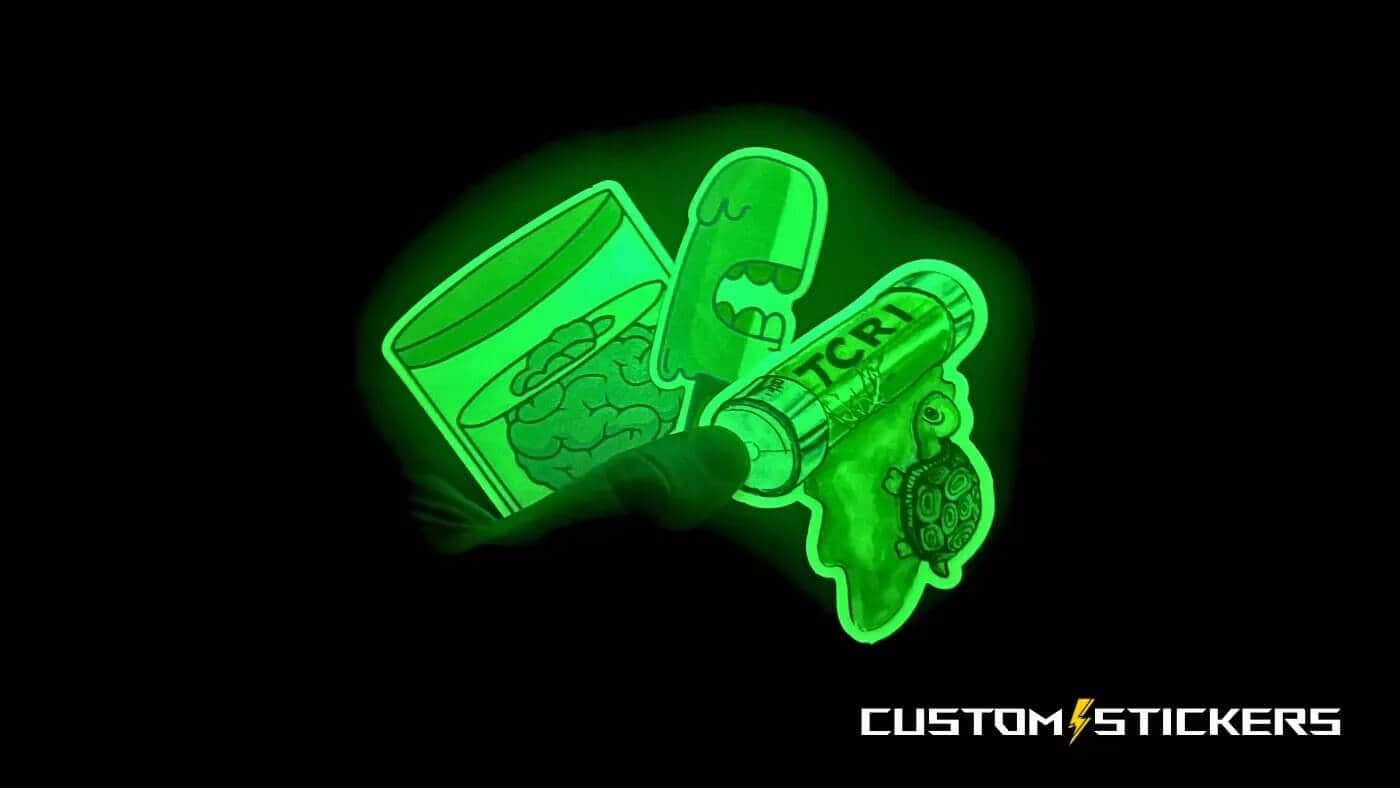
Glow in the dark stickers are fun, bold, and attention-grabbing—but they can be fussy. What looks perfect on a backlit screen can fade into mush when the lights go out, especially with custom glow in the dark stickers where the material itself does a lot of the visual heavy lifting. Here’s how to keep your art sharp so it actually glows the way you imagined.
1) Choosing Colors with Low Contrast Fills
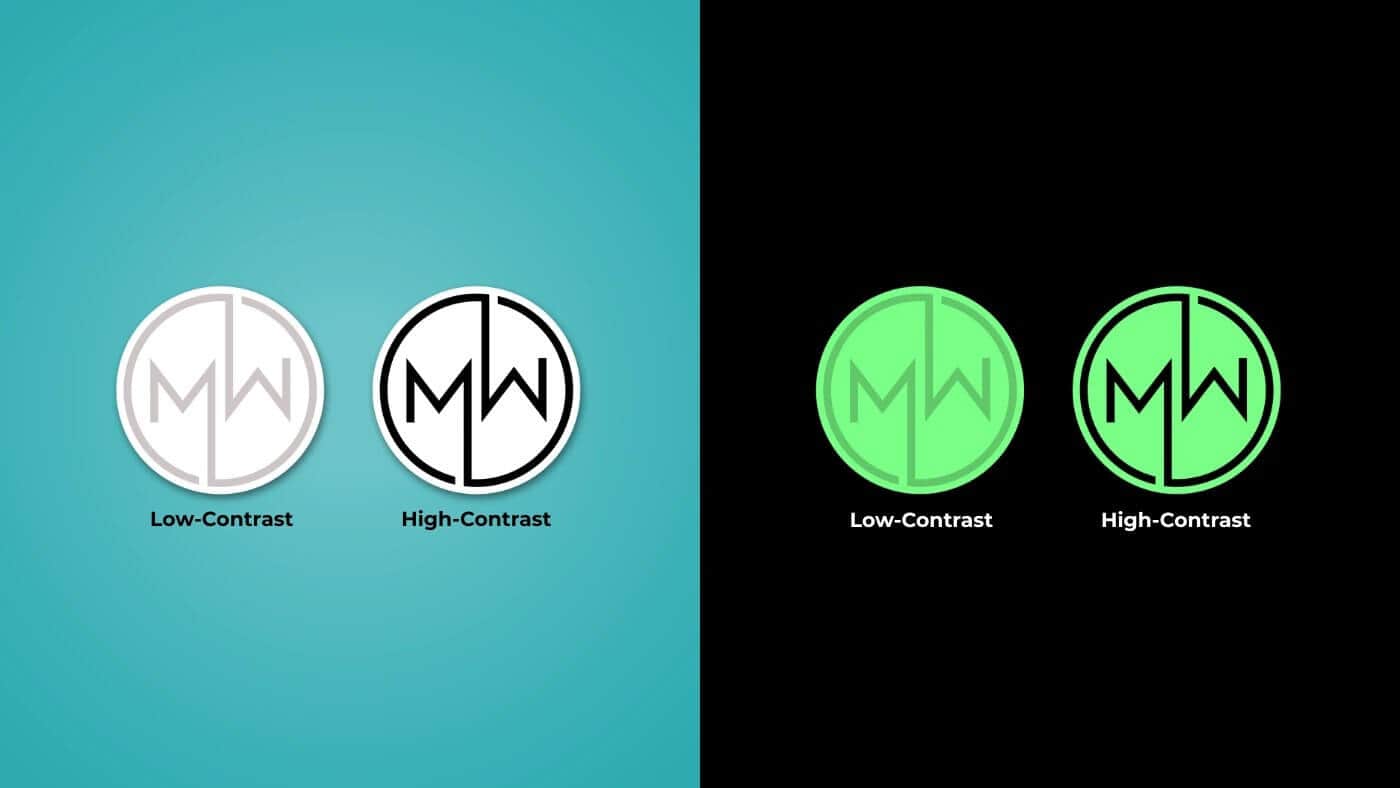
Contrast is everything. If your foreground and background don’t separate enough, details get swallowed once the glow kicks in. Accessibility guidance backs this up in plain daylight—higher contrast improves legibility, and it matters even more in low light.
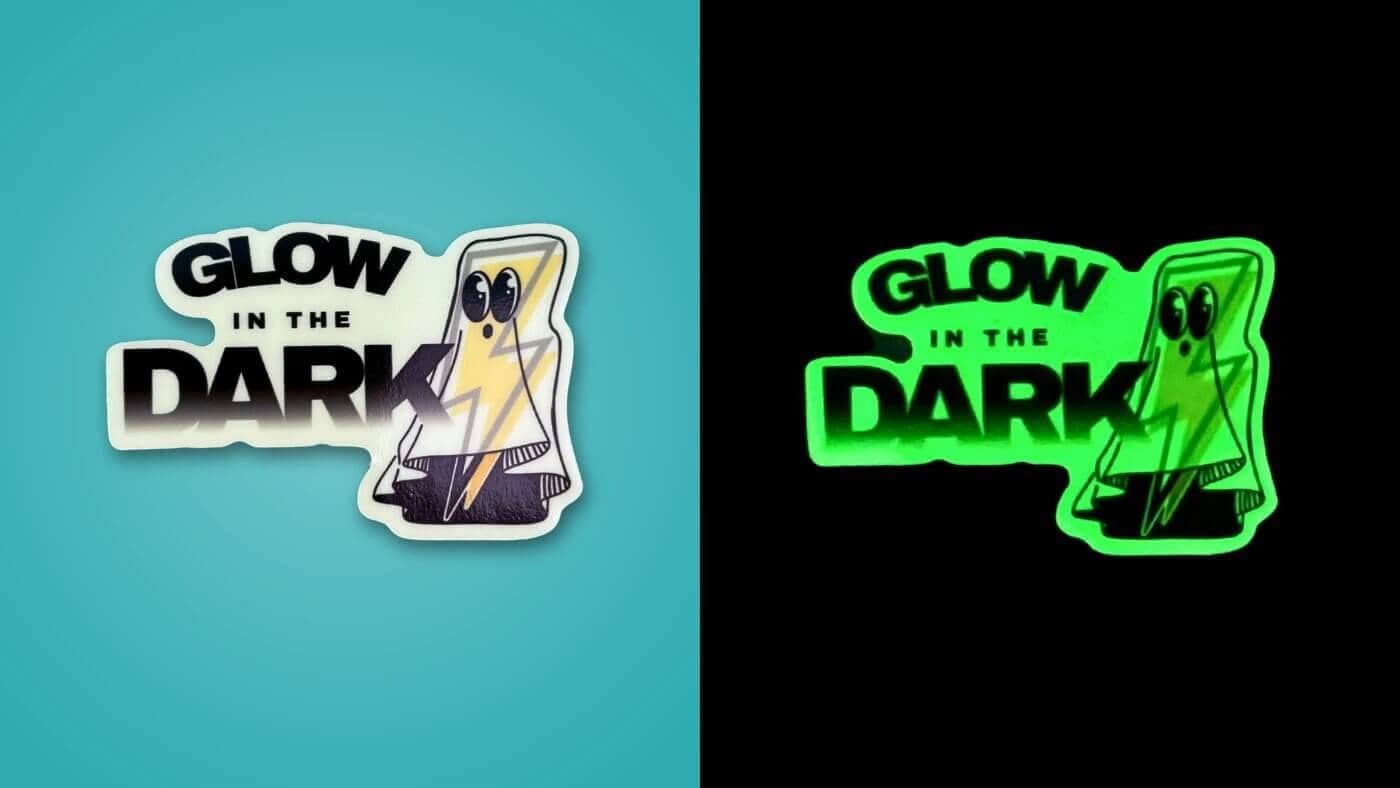
Remember what you’re printing on. Most printable glow films are a pale yellow‑green in normal light because they’re loaded with strontium‑aluminate pigments. That base tint affects every color you put on top of it, and heavy inks behave like shutters: the more opaque and dark the ink, the more glow you block. Use lighter tones wherever you want the material to shine through, and save darker hues for thin accents, outlines, or shadows. Leaving areas unprinted (a knockout) gives you the brightest glow and crisp edges at night.
2) Overcrowding the Design
Glow has a soft personality. As the pigment releases stored light, very small details can visually “bleed” together, especially if they were marginal to begin with. That ornate filigree? It might turn into a smudge in the dark.
Keep the structure simple:
Large, simple shapes read best.
Clear type with sturdy stroke widths beats hairline scripts.
Defined outlines help separate layers without burying the glow.
This isn’t just an aesthetic opinion; legibility research and signage guidelines repeatedly favor clear forms and strong contrast for low‑light readability. Minimalist layouts almost always look cleaner both day and night.
3) Forgetting to Consider Real‑World Glow
Glow is not neon. Fluorescent and neon effects look “electric” because they’re energized by blacklight or voltage; photoluminescent vinyl stores light and releases it gradually, so the effect is softer and decays over time. Expect a gentle, usable glow.
Charge and environment matter more than most people think:
Charge time & brightness: Modern films can charge fast and glow for hours, but performance depends on light intensity. As an example, Avery Dennison specifies that ~5 minutes at 1000 lux can yield 10+ hours of visible glow (decaying over that period). Building‑code luminance specs for egress products are much lower than what designers imagine when they hear “glow,” which is one reason expectations get out of whack.
Where the sticker lives: A laptop lid (often charged indoors under LEDs) will glow differently than packaging that sits in a sunny storefront all afternoon, or a water bottle that spends most of its time in a backpack. Plan for the least favorable case.
Finish and reflections: Non‑glare, high‑contrast pairings are easier to read when ambient light is low. That’s been true forever in signage, and it still applies here.
A few workflow notes that save headaches:
If you need maximum nighttime impact, let the material glow—reserve open areas or use lighter inks. Use dark colors as accents.
If the sticker must be readable in both states, test two lighting scenarios: charged and glowing, and normal indoor light. Bold, high‑contrast variants usually win in both.
Manage expectations with your team or client: glow intensity decays. It’s normal. That’s how phosphorescence works.
Conclusion
If you want glow that actually works, design for the material: high contrast, light colors (or knockouts) where you want brightness, and simple layouts with clear type and confident outlines.
Design your custom glow in the dark stickers with CustomStickers.com and see your artwork come to life—day or night.
Custom Glow in the Dark Stickers
$62.00
Description Custom Glow in the Dark Stickers | High-Quality Stickers Glow-in-the-dark stickers are a fun and practical way to make your designs stand out—day or night! These stickers not only showcase your artwork but also light up in the dark,… read more