TLDR
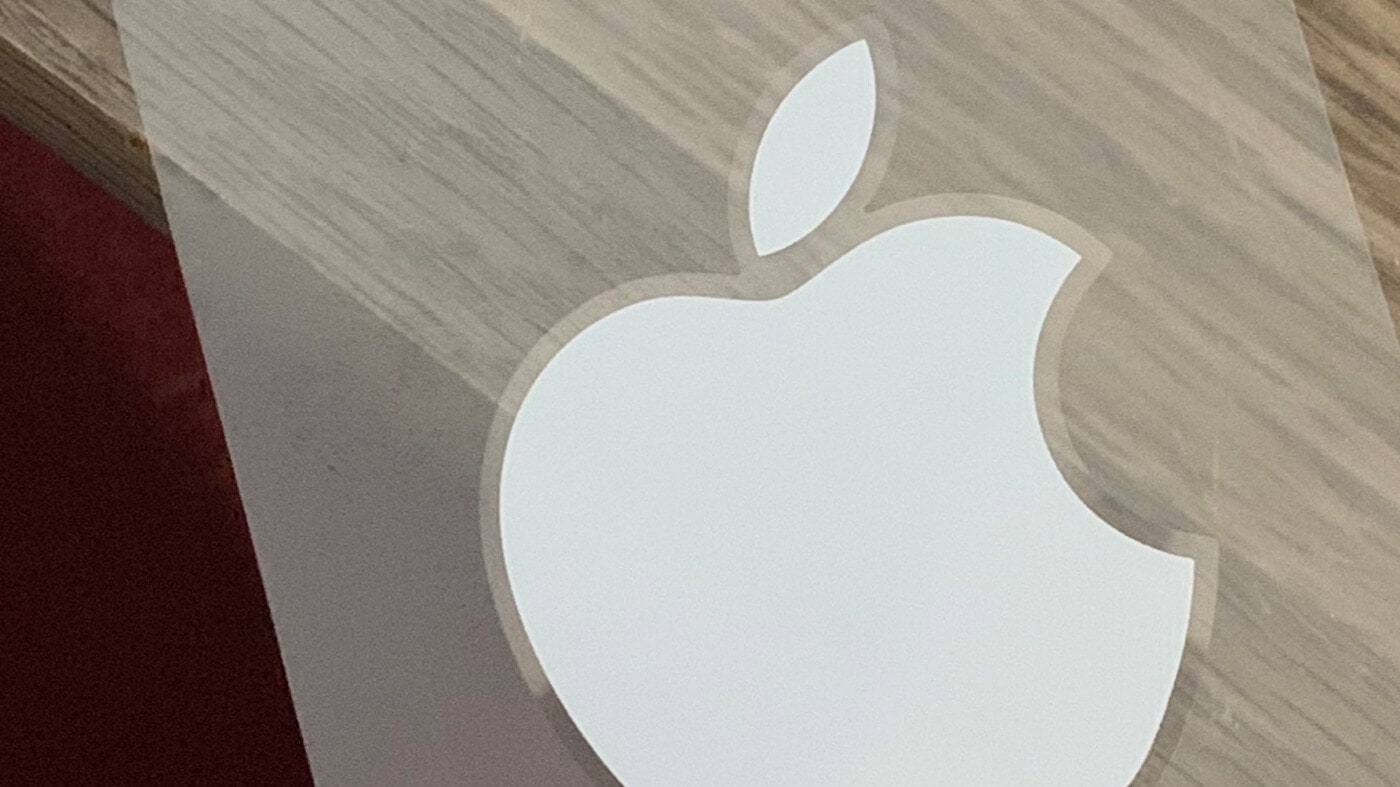
- Apple logo stickers were included with products for decades, with examples dating back to the Apple II era in the late 1970s.
- The stickers worked because customers chose to display them. A logo on a car, laptop, notebook, or guitar became a voluntary endorsement rather than a conventional advertisement.
- Apple kept the design simple and recognizable while changing sticker colors and styles along with its broader visual identity.
- Apple began removing pack-in stickers from product boxes in 2024 as it moved toward plastic-free, fiber-based packaging.
- The lesson for businesses is not simply to give away stickers. It is to create branded stickers that customers actually want to keep, display, and associate with the brand.
There was a time when opening a new Apple product almost always came with one small extra: a sheet of Apple logo stickers.
They did not explain the product. They did not include a coupon. They did not ask you to follow Apple on social media.
They were simply Apple logos.
And that simplicity was part of what made them work.
Apple logo stickers became one of the longest-running examples of promotional sticker marketing in consumer technology. Apple appears to have included logo decals with computers as far back as the Apple II era in the late 1970s, and Apple stickers were documented among the materials packaged with the original Macintosh in 1984.
It would be a stretch to say that stickers made Apple successful. Apple built its business through products, design, software, retail, advertising, and a long list of other factors.
But the stickers did something valuable: they gave customers an easy way to publicly identify with the brand.
That is a useful lesson for almost any business using promotional stickers today.

Apple Logo Stickers Started Early
Apple's sticker tradition goes back much farther than the iPhone.
WIRED reported in 2002 that Apple had been including decals with its products since the Apple II era in the late 1970s. Documentation of the original Macintosh package from January 1984 also lists Apple logo stickers among the materials included with the computer.
The early stickers featured Apple's familiar six-color rainbow logo.
That mattered because the Apple logo was already unusually well suited to a sticker. It had a distinctive silhouette, strong colors, and almost no visual clutter. You did not need a company name, web address, slogan, or explanation beside it.
You saw the apple with the bite missing and knew what it represented.
Over the years, the stickers changed with Apple's visual identity. Collector Matt Fuller has documented Apple sticker designs ranging from early rainbow versions with the "apple computer" wordmark to later white, monochrome, translucent, and product-specific versions.
The basic idea, though, stayed remarkably consistent:
Give someone a recognizable symbol and let them decide where to put it.
Why Apple’s Promotional Stickers Worked
A sticker can be an advertisement. But Apple's stickers were more effective when customers stopped treating them like advertisements.
That distinction matters.
Someone driving past a billboard knows they are being advertised to. Someone seeing an Apple logo on a friend's car sees something different.
The friend chose to put it there.
That turns branded merchandise into a form of customer endorsement.
A 2002 WIRED story described Apple decals appearing on cars, bikes, skateboards, storefronts, and even Windows PCs. The article characterized the decals as a notably effective and inexpensive piece of Apple's marketing.
Modern sticker marketing still works on much the same principle. Customers place branded stickers on water bottles, laptops, toolboxes, notebooks, vehicles, equipment, and other objects they use regularly. Those placements can create repeated brand exposure without requiring the company to purchase another ad impression each time.
But exposure is only part of the story.
The Customer Controls the Placement
This may be the most important part of Apple's sticker strategy.
Apple did not stick its logo onto the customer's car.
It handed the customer a sticker.
That tiny difference changes the relationship completely.
Using the sticker becomes optional. And when someone voluntarily puts your company logo somewhere visible, the placement carries more meaning than paid advertising.
The customer is effectively saying:
I like this brand enough to put its logo on something I own.
That is difficult to manufacture with conventional advertising.
The Sticker Became a Badge of Identity
Apple spent much of its history positioning its products as something more personal than generic office equipment.
That made the logo especially effective as a badge.
During the earlier personal-computer era, owning a Macintosh could say something about the person using it. In the iPod and early iPhone eras, Apple products became even more visible parts of music, design, technology, and popular culture.
The sticker allowed that identity to travel beyond the device itself.
Put one on a car window and the Apple logo traveled around town.
Put one on a guitar case and it followed a musician.
Put one on a laptop and it stayed visible in classrooms, airports, offices, coffee shops, and conferences.
Shopify's current guidance on sticker marketing makes the same broader point: branded stickers can help customers signal that they belong to a community or identify with a company's tone, interests, or values.
Apple had been putting that idea into practice for decades.
Apple Kept the Design Simple
Another useful lesson is what Apple generally did not put on these stickers.
There was usually no:
- phone number
- web address
- discount code
- product description
- long slogan
- list of features
It was just the logo.
That worked because Apple had already invested heavily in making the logo recognizable.
Small businesses obviously do not begin with Apple's level of brand recognition. But the design principle still applies.
A promotional sticker does not have to explain your entire business.
In fact, trying to fit too much information onto a small sticker can make the design less appealing and less likely to be displayed.
A clean company logo, mascot, illustration, slogan, or recognizable graphic can sometimes be much more effective.
The goal is to make the sticker feel like something worth keeping.
Apple Turned the Unboxing Experience Into Marketing
There was also something clever about where customers received the stickers.
They arrived inside the product box.
That meant the customer discovered the sticker immediately after purchasing something they presumably wanted.
Think about the timing.
You buy a new computer, iPod, or phone. You open the packaging. The product is new. The experience feels good.
And sitting inside the box is a small piece of branded merchandise.
The sticker becomes associated with that moment.
Businesses can apply the same idea without copying Apple directly. A branded sticker can work well as:
- a package insert
- a thank-you gift
- an event giveaway
- an order freebie
- part of a subscription box
- a bonus included with merchandise
- an addition to customer welcome kits
The sticker itself may cost very little compared with the primary product, but it gives the customer something separate that can leave the package and appear somewhere else.
The Marketing Can Last Long After the Purchase
Digital advertising disappears almost immediately.
A social post moves down the feed.
A paid search ad vanishes when the campaign ends.
A good sticker can remain on a laptop or water bottle for years.
That gives promotional stickers an unusual marketing characteristic: the distribution happens once, but the potential exposure continues.
This is why material and print quality matter.
If a business expects customers to put stickers on bottles, cars, outdoor equipment, or frequently handled items, the sticker needs to hold up reasonably well. If it starts peeling or fading almost immediately, the brand impression goes with it.
For businesses looking to use this same approach, CustomStickers.com business stickers can be ordered with custom artwork, sizes, shapes, and finishes for branding, packaging, events, and customer giveaways. CustomStickers.com business stickers
The important part is still the design. Durability keeps the sticker around. A design people actually like gives them a reason to place it somewhere in the first place.
Then Apple Started Removing the Stickers
And this is where the history becomes more interesting.
After decades of including logo stickers in product packaging, Apple began phasing them out.
In 2024, new iPad packaging stopped automatically including the familiar Apple stickers. Ars Technica reported that Apple Stores could still provide limited stickers on request at the time, but the default pack-in was being removed as Apple worked toward eliminating plastic from its packaging.
The transition continued.
Apple's 2026 Environmental Progress Report says the company met its goal of removing plastic from its packaging and that new Apple products now ship in 100% fiber-based packaging.
So one of Apple's longest-running promotional traditions eventually ran into another company priority: packaging materials and recyclability.
That does not make the original sticker strategy less interesting.
If anything, it gives businesses another useful lesson.
A good marketing tactic does not have to last forever to have been valuable.
Marketing tools should fit the brand, product, customer, and operational priorities of the moment.
For Apple, stickers made sense for decades.
Eventually, the packaging strategy changed.
What Small Businesses Can Learn From Apple’s Sticker Strategy
You do not need Apple's marketing budget to use the basic idea.
In fact, promotional stickers are particularly useful for small businesses because the concept works at relatively modest quantities.
But handing someone any random logo sticker is not enough.
1. Create a Sticker People Would Actually Use
This is the first test.
Ask:
Would someone put this on a laptop even if we did not ask them to?
If the answer is no, consider improving the design.
Your regular corporate logo might work. But a mascot, illustrated version of your logo, short phrase, inside joke, local reference, or product-related design might work better.
2. Make the Brand Recognizable
Apple could use only its icon because people knew exactly what it meant.
A smaller company may need a little more context.
That could mean adding the company name beneath the logo or incorporating a short website address when appropriate.
But keep it readable.
A sticker should not look like a business card squeezed into two inches.
3. Give Stickers to People Who Already Like You
Apple did not primarily distribute its stickers randomly on street corners.
It put them in boxes going to people who had just purchased Apple products.
That is an important targeting lesson.
Your existing customers may be your best sticker audience.
Try including stickers with:
- ecommerce shipments
- retail purchases
- completed service jobs
- membership packages
- event orders
- subscription deliveries
People who already have a positive relationship with the company are far more likely to display the brand.
4. Give People More Than One Design
Apple usually kept things simple, but small businesses can take the concept further.
Instead of producing only a corporate logo, consider several designs around your brand.
A coffee shop could make stickers around specific drinks.
A bike shop could create trail or cycling-themed designs.
A brewery could create illustrations based on individual products.
A gaming company could turn characters or inside jokes into sticker designs.
Now the sticker is not merely an advertisement.
It is something the customer can choose.
5. Match the Sticker to Where It Will Be Used
Think about placement before printing.
Laptop stickers and notebook stickers can be relatively small.
Bumper stickers need to be readable from farther away.
Packaging stickers may need a completely different shape and adhesive strategy.
Water bottle stickers need durability.
There is no single ideal promotional sticker. The format should fit the job.
A Simple Promotional Sticker Campaign
If I were building a small-business sticker campaign based on the best part of Apple's approach, I would keep it straightforward.
First, make one strong logo sticker.
Then make two or three designs that are more about the customer than the company. These might use humor, illustrations, hobbies, local references, or ideas connected to your products.
Include one sticker with each order.
For higher-value orders, include several and let the customer choose what to use.
Bring extras to events.
Give them to employees.
Put some near your checkout counter.
And pay attention to what customers actually take and display.
That last part matters. The design customers consistently choose is telling you something about how they see your brand.
You can then build future merchandise and promotional designs around what is already working.
The Real Lesson From Apple’s Stickers
Apple's stickers were never complicated.
That was the point.
A company with some of the largest advertising campaigns in the world also spent decades putting tiny logo decals inside product boxes.
Customers did the rest.
They stuck them on cars, computers, notebooks, windows, equipment, and countless other surfaces.
The stickers did not create Apple.
But they gave enthusiastic Apple customers a physical way to display their connection to the brand. And every customer who chose to display one turned a simple package insert into a small piece of word-of-mouth marketing.
Apple eventually moved away from automatically including them as its packaging priorities changed.
The underlying marketing lesson still holds:
The best promotional item is not necessarily the one that says the most. It is the one your customer actually wants to keep.
FAQs
When did Apple start including logo stickers with its products?
Apple logo stickers have been documented with Apple computers going back to the Apple II era in the late 1970s. Stickers were also included with the original Macintosh package in 1984.
Does Apple still include logo stickers with every product?
No. Apple began removing the traditional pack-in stickers from some products in 2024 as part of a broader move away from plastic packaging. Apple now says new products ship in 100% fiber-based packaging.
Why were Apple stickers good marketing?
Customers voluntarily placed the stickers on visible personal items. That allowed Apple's logo to spread beyond the product itself while also giving customers a way to show their connection to the brand.
Are promotional stickers effective for small businesses?
They can be. The strongest sticker campaigns give customers designs they actually want to use rather than treating the sticker like a miniature advertisement. Packaging inserts, event giveaways, retail counters, and order freebies are common distribution methods.
What should go on a promotional sticker?
Usually less than you think. A strong logo, mascot, illustration, short phrase, or recognizable graphic is often easier to read and more appealing than a sticker crowded with marketing copy.
References
- Leander Kahney, “Apple's Stickiest Marketing Ploy,” WIRED, October 22, 2002. Read the WIRED article
- Early Macintosh, original Macintosh package documentation, including Apple logo stickers in the January 1984 materials. View Early Macintosh documentation
- Matt J. Fuller, “Apple Logo Stickers (1980s–present).” View the Apple sticker collection
- Andrew Cunningham, “Apple’s plastic-free packaging means pack-in logo stickers are going away,” Ars Technica, May 9, 2024. Read the Ars Technica report
- Apple, 2026 Environmental Progress Report. Read Apple's Environmental Progress Report
- Shopify, Sticker Marketing Ideas + Tips for Small Business Owners, 2026. Read Shopify's sticker marketing guide