
Table of Contents
- TLDR
- Decide What Your Coffee Cup Label Needs To Do
- Choose The Best Size And Shape For Labels For Coffee Cups
- Design Labels That Customers Can Read Quickly
- Pick A Material That Handles Heat, Moisture And Handling
- Use Roll Labels For Busy Coffee Shops
- Prepare Artwork Before You Order
- Place Labels Where They Work Best
- Common Mistakes To Avoid
- Conclusion
- FAQs
TLDR
Labels for coffee cups help cafés, roasters, food trucks and events turn plain cups into branded packaging without ordering fully custom printed cups.
Start by choosing the label’s job, then pick a size, shape, material and placement that fits the actual cup. For most coffee projects, smaller circles, ovals, rectangles and roll labels are easier to apply than large wraparound designs.
You can order custom labels for coffee cups from CustomStickers.com after you prepare clean artwork, check the size and review your proof.
Coffee cups are small, curved and handled constantly. That means labels for coffee cups have to do more than look nice in a mockup. Labels for coffee cups need to work in the real world, not just in the design file. They need to fit the cup, stay readable, apply cleanly and hold up through a real café shift, catered event or morning rush.
The good news is that you do not need custom printed cups to make your packaging feel finished. Labels for coffee cups are flexible, easy to update and useful for branding, drink identification, seasonal promotions and events. You can start with blank cups, sleeves or bags, then add the exact label you need for each product or occasion.
Decide What Your Coffee Cup Label Needs To Do
Before you design anything, decide the main job of the label. Labels for coffee cups usually fall into one of three groups: branding, organization or promotion.
Branding labels are the most common. These include your logo, shop name, website, social handle or a short tagline. They work well on plain hot cups, cold cups, sleeves, bags and carriers.
Organization labels help staff and customers keep drinks straight. These can include drink names, size, milk type, syrup, customer name or order number. They are useful for cafés, catering, offices, markets and events where drinks need to move quickly.
Promotional labels are built around a specific message. You might use them for a seasonal latte, a QR code, a loyalty program, a new roast or a limited-time offer. This is one of the best reasons to use labels for coffee cups instead of printing directly on cups. Labels for coffee cups let you change the message whenever the menu changes.
A simple rule helps: one label, one main job. A logo label can mention your website. A promo label can include a QR code. But if one small sticker tries to carry your logo, full menu, slogan, coupon, QR code and origin story, it will get crowded fast.
Choose The Best Size And Shape For Labels For Coffee Cups
Coffee cups curve and taper, so shape matters. A label that looks good flat may wrinkle or lift once it wraps around a cup. Smaller labels are usually easier to apply and more reliable.
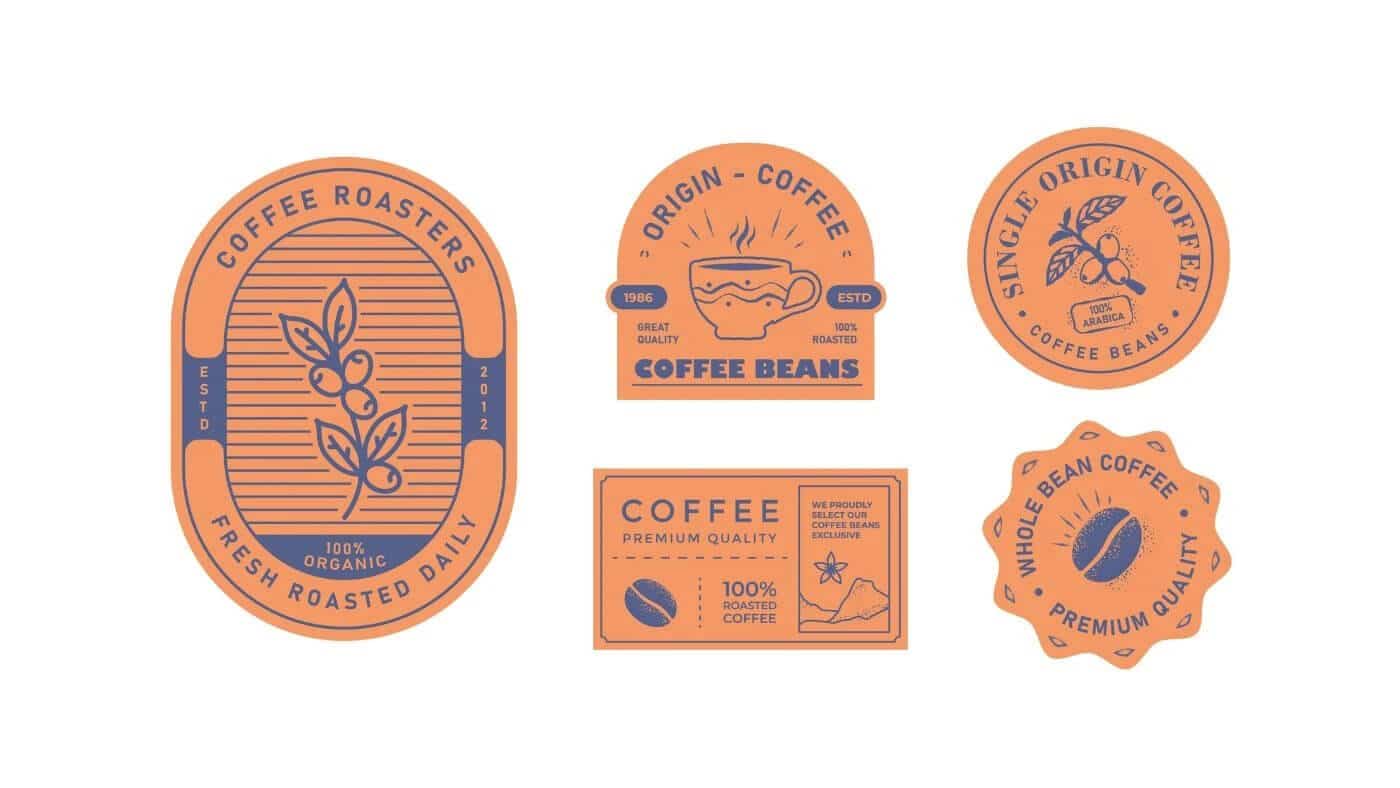
For most labels for coffee cups, circles, ovals and compact rectangles are safe starting points. Labels for coffee cups should feel like they belong on the cup, not like a flat label forced onto a curved surface. A 2-inch circle works well for many standard hot cups. A 2.5-inch circle gives more room for a logo or short message on larger cups. Rectangles can work well on sleeves because the sleeve surface is flatter than the cup itself.
Use this as a starting guide:
| Use Case | Good Label Shape | Starting Size |
|---|---|---|
| Small hot cup | Circle or oval | 1.5" to 2" |
| 12 oz hot cup | Circle or oval | 2" to 2.5" |
| 16 oz hot cup | Circle, oval or rectangle | 2.5" to 3" |
| Coffee sleeve | Rectangle or die cut | 2" x 3" |
| QR code promo | Square or rectangle | 2" x 2" or larger |
| Bag or lid seal | Circle | 1.5" to 2" |
The best test is simple. Print a rough label on paper at actual size, cut it out and tape it to the cup. Look at it from arm’s length. If the logo is readable and the label sits smoothly, you are close. If the edges pull away or the design feels cramped, adjust before ordering.
Design Labels That Customers Can Read Quickly
Labels for coffee cups are usually seen for a few seconds. A customer grabs the drink. A barista calls a name. Someone sets a cup on a conference table. The label needs to make sense fast.
Use a clear focal point. For most branded cups, that is your logo. For drink labels, it is the drink name. For event labels, it is the event name or date.
Keep type large enough to read. Thin scripts, tiny all-caps text and low-contrast colors can look nice on screen but disappear on a cup. Strong contrast matters, especially if the cup is kraft brown, black, navy or clear.
Good labels for coffee cups usually include:
Logo Or Main Message: Make the key point obvious.
Readable Font: Use simple type for small text.
Strong Contrast: Make the label easy to read on the cup color.
Safe Margins: Keep text away from the cut edge.
Simple Colors: Two or three colors are often enough.
Tested QR Code: Scan it after printing at actual size.
QR codes can work well on labels for coffee cups, but only when they are large enough and placed on a surface that does not curve too much. A sleeve, bag or carrier may scan better than the side of a tapered cup.
Pick A Material That Handles Heat, Moisture And Handling
Labels for coffee cups live in messy conditions. Hot cups create warmth and steam. Iced cups create condensation. Customers touch the label, set the cup in a car cupholder and sometimes spill a little coffee. It happens.
That is why basic office labels are usually not the best choice. They can wrinkle, smear or peel when exposed to moisture. Labels for coffee cups should be made with a material and finish that fits the job.
CustomStickers.com offers custom labels that can be used for packaging, branding and food and drink products. Laminated labels are a strong choice for coffee shops because they are more resistant to moisture and handling than plain paper labels. Matte labels have a clean, understated look. Gloss labels make colors look brighter. Clear labels can look sharp on smooth white cups or clear cold cups, but they may be harder to read on kraft or textured surfaces.
Use labels for coffee cups only on the outside of the cup, sleeve, lid, bag or packaging. Do not place labels inside the cup or anywhere the drink directly touches. For any project involving direct food contact, check the requirements before ordering.
Use Roll Labels For Busy Coffee Shops
The format matters too. Roll labels, sheet labels and individual stickers can all work, but they fit different workflows.
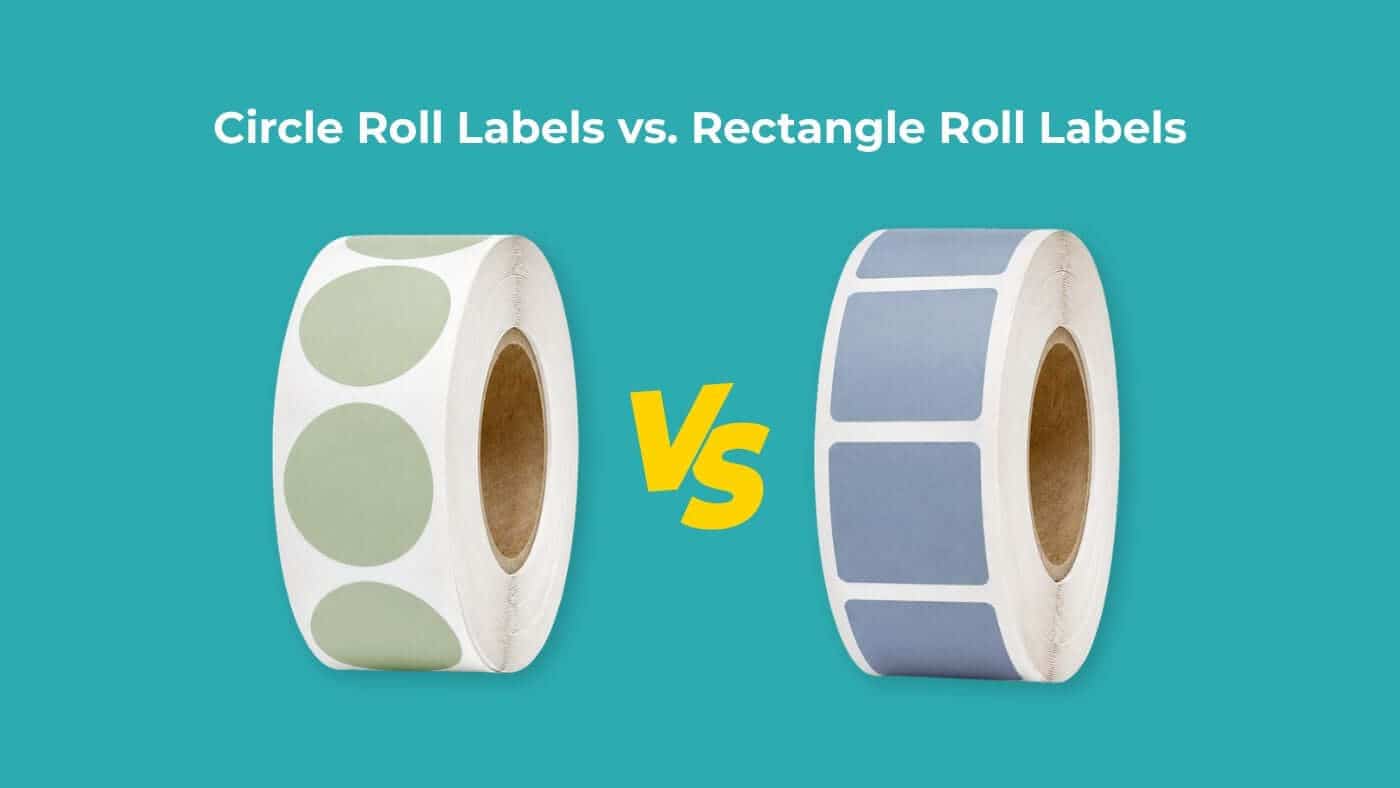
Roll labels are usually best for cafés, roasters, food trucks and regular packaging stations. They are easy to keep by the register, espresso machine or packing table. Staff can peel and apply them quickly.
Sheet labels are useful for smaller batches, events, parties or test runs. They stay flat and are easy to store, but they are not always as convenient for high-volume daily use.
Individual stickers work well when the label doubles as merch. For example, your café logo sticker might go on coffee cups, retail bags, thank-you cards and customer laptops.
For most businesses that use labels for coffee cups every day, roll labels are the practical pick. They keep the process simple and repeatable.
Prepare Artwork Before You Order
Good artwork prevents most label problems. Start with the cleanest logo file you have. Vector files are best for logos because they stay sharp at any size. A high-resolution PNG can also work if it is built at the final print size.
Before ordering labels for coffee cups, check the file carefully:
Final Size: Build the design at the size you want printed.
Logo Quality: Avoid screenshots and low-resolution files.
Transparent Background: Use transparency for clear or custom-shaped labels.
Readable Text: Print a test at actual size.
Spelling: Check drink names, URLs and social handles.
QR Code: Scan a printed test, not just the screen version.
Cup Color: Preview the label on the real cup or sleeve color.
Cut Edge: Keep important text away from the trim line.
When you order from CustomStickers.com, you can choose the label style, upload your artwork, select your size and quantity and review a proof before production. That proof step helps catch sizing, cutline or layout issues before your labels are printed.
Place Labels Where They Work Best
Placement affects both appearance and function. A logo label usually belongs on the front center of the cup, below the rim and above the area where fingers naturally grip. If you use sleeves, place the label on the sleeve for a flatter surface.
Drink identification labels should go where staff can see them quickly. That might be on the side of the cup, on the lid or near the cup seam, depending on your workflow.
QR code labels should go on the flattest practical surface. A sleeve, takeout bag or cup carrier is often better than a curved cup wall.
For events, consistency matters. If you are applying labels for coffee cups to hundreds of cups, make a simple placement guide. Even a small cardboard template can help keep each label in the same spot.
Avoid placing labels near the drinking rim. Keep labels away from areas that touch the mouth or contact the drink.
Common Mistakes To Avoid
The most common mistake is making the label too large. Large labels can wrinkle on tapered cups. Start smaller and only size up if the cup can handle it.
Another mistake is using too much text. Labels for coffee cups are not menus. Keep the message short and readable.
Do not ignore moisture. If labels for coffee cups will be used on iced drinks, choose a material that can handle condensation.
Do not place tiny QR codes on curved surfaces. They may look fine in the design file but fail in real use.
And do not skip the paper test. Labels for coffee cups should always be tested on the actual cup or sleeve before a larger order.
Conclusion
Labels for coffee cups are a simple way to make plain cups feel branded, organized and intentional. The best labels start with a clear purpose, fit the actual cup, use readable artwork and rely on a material that can handle coffee shop conditions.
For cafés, roasters, food trucks, markets and events, custom labels give you flexibility that fully printed cups often cannot. You can brand everyday drinks, promote seasonal specials, add QR codes or personalize cups for a one-time event.
To get started, choose a label format from CustomStickers.com custom labels, upload your artwork and review your proof. With the right size, shape and material, labels for coffee cups can make even a plain cup feel finished.
FAQs
What Size Labels For Coffee Cups Work Best?
For many standard coffee cups, 2-inch to 2.5-inch circle labels work well. Larger cups and sleeves may support 3-inch circles or 2-inch by 3-inch rectangles. Always test the size on the actual cup.
Are Labels For Coffee Cups Waterproof?
They can be moisture-resistant when made with the right material and finish. Laminated labels are a better choice for cups exposed to spills, steam, handling or condensation.
Can I Put Labels On Hot Coffee Cups?
Yes, labels can go on the outside of hot coffee cups. Keep them away from the drinking rim and test the label on the actual cup before ordering in bulk.
Are Roll Labels Better Than Sheet Labels?
Roll labels are usually better for daily café use because they are fast to apply and easy to store near a work area. Sheet labels are useful for smaller events or test batches.
Can I Add QR Codes To Labels For Coffee Cups?
Yes, QR codes can work well if they are large enough, high contrast and placed on a surface that scans easily. Test a printed sample before ordering.