Table of Contents
- Why Specialty Stickers for Branding Work Better With a Clear Role
- Clear Stickers for Packaging, Windows, and Clean Brand Presentation
- Holographic Stickers for Attention, Merch, and Events
- Chrome Vinyl for Premium Accents and Sharp Logo Use
- Glitter Vinyl for Playful Brands and Seasonal Campaigns
- How To Keep Specialty Finishes Consistent Across the Brand
- Start Small and Build From There
- FAQs
Specialty stickers for branding can do a lot of work when you use them with a clear purpose. That is the part people miss. They pick a material because it looks cool on a sample sheet, then later realize it does not match the packaging, does not fit the tone of the brand, or just feels random. The sticker is fine. The plan was off.
I think the better approach is simple. Do not start with the finish. Start with the job. Are you trying to make packaging look cleaner? Make handouts feel more collectible? Add a premium accent to a box? Get more attention at an event table? Once you know the job, clear, holographic, chrome, and glitter vinyl start making a lot more sense.
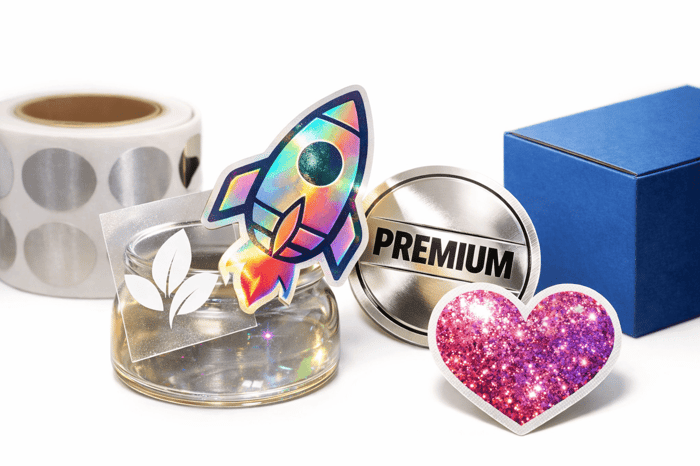
For most brands, specialty stickers for branding work best when each finish has one lane. Clear stickers can make packaging look neat and modern. Holographic can turn a handout into something people keep. Chrome can add a polished metallic edge. Glitter vinyl can make seasonal or playful campaigns feel more alive. You do not need every specialty option. You need the right one for the moment.
Why Specialty Stickers for Branding Work Better With a Clear Role
A lot of brands treat specialty materials like decoration. That is usually where things go sideways. A finish should support the brand, not distract from it.
The easiest way to think about specialty stickers for branding is to assign each material a job.
Clear is for clean presentation.
Holographic is for visibility and excitement.
Chrome is for a sharp, metallic accent.
Glitter is for energy, personality, and limited-run fun.
That sounds obvious, but it helps. It stops you from using a loud finish on every piece of packaging just because it looked good in isolation. And it keeps the overall system feeling consistent.
If you are trying to build a polished brand, consistency matters more than novelty. A simple clear label on packaging and a bold holographic giveaway sticker can live in the same brand world. Four competing finishes on the same product line usually cannot.
Clear Stickers for Packaging, Windows, and Clean Brand Presentation
Clear stickers are one of the most practical specialty materials because they can look subtle and intentional at the same time. When applied well, they create that “printed on the product” look that a lot of modern brands want.
This is especially useful for glass jars, bottles, windows, smooth containers, and any packaging where the surface itself is part of the presentation. Beauty brands, skincare brands, candle makers, beverage companies, and minimal packaging brands often get the most out of clear stickers because the clear material lets the container stay visible.
But clear stickers need planning. They do not behave like white vinyl. The surface behind the sticker becomes part of the design. That means the color of the product, the container, the lighting, and even application quality all affect the final look.
This is also where white ink matters. On clear materials, white underprint helps preserve readability and keeps colors from looking weak or washed out on darker or transparent surfaces. If your logo or text needs to stay crisp, that print setup matters a lot.
Good uses for clear stickers include:
- Product labels on jars and bottles
- Window decals
- Minimal logo applications
- Clean secondary packaging
- Promo stickers where transparency is part of the design
If you want a good example of how to think through clear materials, CustomStickers has a helpful post on How to Get the Most Out of Your Clear Labels
Custom Clear Stickers

$57.99
Description Custom Clear Stickers | High-Quality Transparent Stickers Clear stickers are perfect for storefront windows and car windows. The clear vinyl material is also an excellent design option when you want your own artwork to be seen, and also want the… read more
Holographic Stickers for Attention, Merch, and Events
Holographic stickers are built for attention. They shift under light, reflect color, and usually feel more collectible than a standard sticker. That makes them a strong choice for event handouts, merch inserts, creator drops, launch kits, and promo stickers you actually want people to keep.
For specialty stickers for branding, holographic works best when the goal is visibility. It is not usually the best everyday packaging choice for a restrained brand. But it is excellent for moments where you want a logo, icon, or campaign design to feel more memorable.
The biggest mistake with holographic is overdesigning for it. If the artwork already has too much going on, the finish can push it into clutter. Strong holographic designs usually have:
- Bold shapes
- Clear contrast
- Enough open space for the material to show
- A simple visual hierarchy
That last part matters more than people think. The finish is already active. The design does not need to compete with it.
This is one reason holographic often works better for sticker packs, event swag, artist merch, and limited drops than for primary packaging. It creates a moment. And sometimes that is exactly what the brand needs.
CustomStickers also has a useful guide here: How to Design Perfect Holographic Die Cut Stickers for Your Brand
Holographic Stickers

$37.99
Description Holographic Stickers | Holo Sticker Decals By default, Holographic stickers have a glossy finish. Selecting a size for your custom stickers means you are selecting the dimension of the longest or widest part of your sticker. We'll scale the… read more
Chrome Vinyl for Premium Accents and Sharp Logo Use
Chrome is a good example of a finish that can look very polished when used with restraint. It can also look cheap fast if the design asks too much of it.
That is why chrome works best as an accent material. Think of it as a way to add a metallic edge, not as the solution for every sticker in the system.
For specialty stickers for branding, chrome is useful when you want to signal premium, modern, technical, or high-contrast design. It works well for:
- Logo badges
- VIP or members-only stickers
- Product seals
- Limited edition markers
- Branded inserts in launch kits
- Small-format labels with simple, confident artwork
Like other specialty materials, chrome changes how colors read. Metallic surfaces can affect printed colors in ways that are either helpful or annoying depending on the design. That is why it helps to decide early where you want the shine to show and where you want it blocked out.
My advice is simple. Let chrome do one thing well. Maybe it carries the icon. Maybe it turns the border metallic. Maybe it highlights one small piece of the logo. But do not ask it to carry dense messaging, fine detail, and multiple competing effects at once.
Glitter Vinyl for Playful Brands and Seasonal Campaigns
Glitter vinyl is the material most likely to get overused. That is not because it is bad. It is because it is fun, and fun materials tempt people to keep adding more.
Still, glitter has a real place in branding. It makes sense for playful ecommerce brands, gift companies, party goods, kids products, boutique retail, seasonal promotions, and creator merch with a bright personality. It can also work for subscription boxes or thank-you stickers where you want the unboxing moment to feel warmer or more personal.
Where glitter usually struggles is with brands built around restraint, minimalism, or technical precision. That does not mean those brands can never use it. It just means glitter is more likely to work as a campaign move than as a core brand material.
The best uses for glitter vinyl are usually:
- Holiday promotions
- Seasonal packaging accents
- Bonus stickers in orders
- Limited merch drops
- Sticker packs meant to feel collectible
- Thank-you stickers with personality
For specialty stickers for branding, glitter works best when the design still holds up without the sparkle. That is a useful test. If the art only works because the material is doing all the heavy lifting, the design probably needs another pass.
How To Keep Specialty Finishes Consistent Across the Brand
This is where brands either look intentional or look messy.
If you are using specialty stickers for branding, the artwork still needs to feel like it came from the same brand system. That means your typography, logo usage, spacing, and color hierarchy should stay familiar even when the finish changes.
A few practical rules help:
Use one specialty finish per use case.
Clear for packaging. Holographic for handouts. Chrome for premium accents. Glitter for seasonal or playful moments.
Keep typography consistent.
Do not switch type styles just because the material is more expressive.
Test on the real surface.
A clear sticker on a dark bottle behaves differently than one on a frosted jar. Holographic on glossy packaging feels different than holographic on a laptop.
Use proofs before production.
Specialty materials can change the feel of a design fast. A proof helps catch problems before they become expensive.
This is one reason CustomStickers.com makes sense for brands that care about presentation. The value is not just having access to specialty options. It is being able to apply those options in a way that still feels coherent.
Start Small and Build From There
The best way to start with specialty stickers for branding is not to order four finishes at once. Start with one real need.
Maybe you need a clear sticker for clean packaging. Maybe you want a holographic giveaway for an event. Maybe a chrome badge fits a premium launch kit. Maybe glitter makes sense for a seasonal insert.
Pick one. See how it performs. Check how it feels in hand. Look at it in the actual environment where customers will see it. Then expand from there.
That approach usually leads to better branding and fewer regret orders.
Because in the end, specialty materials are not there to show off. They are there to make the brand feel more like itself.
FAQs
What Are Specialty Stickers for Branding?
Specialty stickers for branding are stickers made with materials or finishes that create a specific visual effect. Common options include clear, holographic, chrome, and glitter vinyl. Brands use them to make packaging, handouts, and promotional materials feel more intentional.
Which Specialty Sticker Finish Is Best for Packaging?
Clear stickers are usually the best fit for packaging when you want a clean, modern look. They work especially well on jars, bottles, windows, and other smooth surfaces where you want the container to stay visible.
Are Holographic Stickers Good for Business Branding?
Yes, but usually for the right use case. Holographic stickers are great for event handouts, merch, limited drops, and campaign pieces that need to stand out. They are usually better for attention-grabbing moments than for quiet everyday packaging.
When Should I Use Chrome Stickers for Branding?
Chrome stickers work best when you want a metallic, polished look. They are a strong choice for logo badges, premium accents, launch kits, and limited-edition branding pieces. They tend to work better as an accent than as an all-purpose finish.
Do Clear Stickers Need White Ink?
In many cases, yes. White ink helps keep colors, logos, and text visible on clear materials, especially when the sticker is applied to dark, transparent, or reflective surfaces. Without it, some artwork can look faded or hard to read.