
Table of Contents
- TL;DR
- Start With Classroom Rewards You Can Maintain
- Free Classroom Rewards Students Can Choose
- Stickers Make Easy, Low-Cost Classroom Rewards
- Keep the Prize Box Small
- Turn Free Privileges Into Classroom Coupons
- Give Students a Choice
- Use Whole-Class Rewards for Shared Goals
- Match Classroom Rewards to the Age Group
- Reward the Behavior, Not Just the Result
- Avoid Turning Rewards Into a Leaderboard
- Rotate Classroom Rewards Instead of Buying More
- A Simple Affordable Reward Menu
- Quick Checklist for Affordable Classroom Rewards
- Keep the Reward Small and the Recognition Specific
- FAQs
TL;DR
Good classroom rewards do not require a constantly refilled prize box.
Free privileges such as choosing a read-aloud, being the class helper, picking a seat, or getting a few minutes of drawing time can feel special without adding cost.
Stickers, pencils, bookmarks, erasers, and small school supplies work well as low-cost physical rewards.
Give students a few choices instead of assuming everyone wants the same reward.
Connect classroom rewards to a specific action. “You kept working after that problem got hard” tells a student much more than “good job.”
A reward does not have to be expensive to feel important. Some of the most useful classroom reward ideas cost nothing at all. A student may be more excited to use the teacher’s chair for one lesson, choose the class read-aloud, or pick a sticker than to receive another tiny plastic toy.
That is good news for teachers working with real classroom budgets. The goal of classroom rewards is not to build the biggest prize box in the school. It is to notice effort, progress, kindness, responsibility, and other behaviors you want students to understand and repeat. A simple system you can keep using in March is usually better than an elaborate one that exhausts the budget by October.
Start With Classroom Rewards You Can Maintain
A classroom reward system should be easy enough to use on a busy Tuesday afternoon.
Before buying anything, decide how students earn rewards, how often you expect to give them, and whether the reward is for an individual student or the whole class. If twenty students could earn something every week, even a cheap item can become expensive over a full school year.
That is why a mix works well. Use no-cost privileges frequently, inexpensive physical prizes when you want something tangible, and larger experiences less often for milestones.
A simple system might include:
Everyday recognition: specific praise, a sticker, or a point toward a class privilege
Small earned reward: choice of seat, teacher helper, classroom coupon, pencil, or bookmark
Larger milestone: class game time, themed reading time, a small celebration, or another teacher-approved privilege
You do not need three levels. The point is to keep every positive moment from turning into another purchase.
Free Classroom Rewards Students Can Choose
Some of the best classroom rewards are privileges students do not normally get to choose.
Try options such as:
Choose the class read-aloud
Sit in the teacher’s chair for independent work
Pick a classroom job
Be line leader
Choose a brain break
Draw on a designated section of the whiteboard
Work in a preferred seat
Read with a friend
Be the teacher’s helper
Get a positive note or call home
Choose the closing song from a teacher-approved list
These classroom reward ideas are inexpensive because they use things already available in the room. They also reduce the pressure to keep buying novelty prizes.
For younger students, a little presentation can make a free reward feel more concrete. A laminated “Teacher Helper” badge or reusable classroom coupon can turn an ordinary privilege into something that feels earned.
Stickers Make Easy, Low-Cost Classroom Rewards
Stickers are small, easy to store, fast to hand out, and flexible enough for different age groups.
But the message matters.
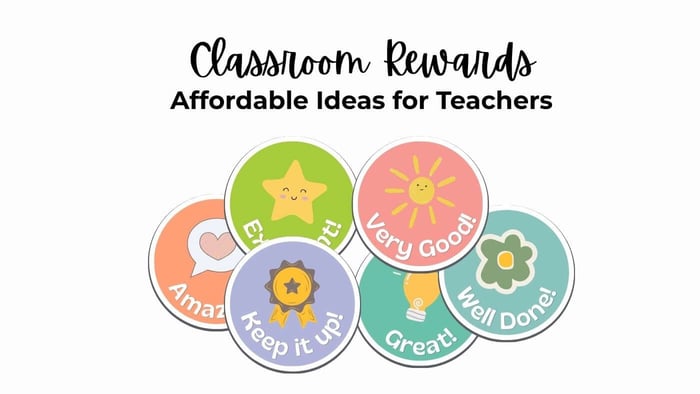
Instead of relying only on “Awesome!” or “Good Job!” designs, consider classroom rewards that tell students what was noticed:
Kept Trying
Strong Focus
Great Revision
Kind Choice
Helpful Teammate
Reading Win
Problem Solver
Asked a Great Question
Ready to Learn
This turns the sticker into a reminder of why it was earned.
Custom sticker sheets are useful because several messages or designs can sit on one backing sheet. One sheet might include reading, math, kindness, organization, and effort stickers, so a teacher can pick the message that fits the moment.
CustomStickers offers classroom stickers and sticker sheets with multiple kiss-cut designs on one sheet. That format can support reward systems, reading logs, classroom jobs, and positive notes home.
Keep the Prize Box Small
A prize box can still be fun. It just does not need to become the foundation of all your classroom rewards.
Choose inexpensive items that are useful enough to keep:
Fun pencils
Erasers
Bookmarks
Mini notepads
Stickers
Pencil grips
Small rulers
Colorful pens for older students
You can also put non-physical rewards in the box. Fold up coupons for “Pick Your Seat,” “Teacher Helper,” or “Choose the Brain Break.” Mixing free privileges with small items stretches the budget and gives students more variety.
Set a refill budget for yourself. Classroom rewards should support the room, not quietly become another monthly expense.
Turn Free Privileges Into Classroom Coupons
A piece of paper can feel surprisingly official when it says a student earned something.
Classroom coupons are among the easiest classroom reward ideas to customize because the prize can be almost anything your school rules allow. Print them on cardstock, laminate reusable versions, or keep a simple stack near your desk.
Useful coupons include:
Pick Your Seat
Choose the Read-Aloud
First Choice of Classroom Job
Teacher’s Chair
Five-Minute Drawing Break
Read With a Friend
Choose the Brain Break
Positive Note Home
Keep redemption simple. If using a coupon requires a long list of exceptions, you probably will not want to manage it for very long.
Give Students a Choice
Not every student wants the same reward.
One student may love being line leader. Another would rather avoid being the center of attention. Some students want physical prizes. Others will happily trade them for drawing time or a chance to read in a preferred spot.
A small menu solves that problem:
Pick one:
Sticker
Choose your seat
Teacher helper
Five-minute drawing break
Rotate the menu during the year. This keeps classroom rewards from feeling stale without requiring a bigger budget.
Choice becomes even more important as students get older. A middle school student may not want a cartoon sticker but may like a laptop sticker, a nice pen, a seating privilege, or a chance to work with a friend.
Use Whole-Class Rewards for Shared Goals
Some classroom rewards work better for groups.
A class can earn progress for smooth transitions, completing a reading challenge, keeping a shared area organized, or reaching another clear collective target.
Affordable whole-class options include:
Ten minutes of a class game
A special read-aloud
Extra drawing or creative time
A classroom dance break
Student choice of a review game
A special seating arrangement
A collaborative puzzle or challenge
A teacher-approved outdoor lesson
Keep the target clear. Students should know what they are working toward.
And avoid systems where one student can “ruin” the reward for everyone. Shared goals are easier to manage when the class keeps adding progress rather than watching points disappear because of one person’s mistake.
Match Classroom Rewards to the Age Group
The best reward for kindergarten and the best reward for eighth grade probably are not the same.
Preschool and Kindergarten
Keep classroom rewards immediate and easy to understand. Stickers, stamps, helper jobs, choosing a song, picking a book, and simple visual certificates can work well.
Elementary School
Students can handle simple goal systems and coupons. Reading stickers, choice time, special seats, bookmarks, pencils, classroom jobs, and small school supplies are easy options.
Middle and High School
Keep the tone more grown up. Consider nice pens, school or club stickers, choice of seat, small privileges, positive messages home, or participation in a class raffle.
Age matters, but so does the group in front of you. Ask students which teacher-approved classroom rewards they would actually like before spending money.
Reward the Behavior, Not Just the Result
A reward is more useful when the student understands what earned it.
The Center on PBIS emphasizes specific praise when acknowledging students’ social, emotional, and behavioral skills. Classroom rewards do not need to carry the whole message by themselves.
Instead of:
“Great job. Pick a prize.”
Try:
“You checked your work after you noticed the first answer was wrong. That was careful problem-solving. Pick a sticker.”
Or:
“You helped your group get organized without taking over. That was strong teamwork. You earned a classroom coupon.”
This connects the recognition to a behavior a student can repeat. It also gives teachers more things to notice than speed, high grades, or being the loudest student with the right answer.
Avoid Turning Rewards Into a Leaderboard
Public charts can be motivating for some students and uncomfortable for others.
If one student has twenty stars and another has two, the system may communicate more than you intended. Students may have different goals or different opportunities to earn recognition.
You can track classroom rewards without making every comparison public:
Individual punch cards
Private sticker trackers
Personal goal sheets
Teacher-kept points
Envelopes with earned coupons
Whole-class progress toward a shared target
The goal is to make positive behavior visible without making the room feel like a ranking board.
Rotate Classroom Rewards Instead of Buying More
Students can lose interest when the same options sit on the menu for months. You do not need to solve that by buying new prizes.
Rotate what you already offer. One month might feature helper jobs and stickers. Another might include reading privileges, drawing time, and choice of seat. Around a school event, use themed classroom rewards connected to reading week, field day, science fair, or another activity.
You can also ask the class. Give students a short list of teacher-approved options and let them vote for the classroom rewards they would most like to earn.
That gives you useful information before you spend anything.
A Simple Affordable Reward Menu
If you want to start tomorrow, keep it small.
Free
Teacher helper
Choose your seat
Pick the read-aloud
Choose a brain break
Positive note home
Five-minute drawing break
Low Cost
Sticker
Pencil
Bookmark
Eraser
Mini notepad
Bigger Class Goal
Review game
Creative time
Special read-aloud
Class puzzle
Teacher-approved outdoor activity
That is enough variety for a workable system. Add or remove options after you see what students actually choose.
Quick Checklist for Affordable Classroom Rewards
Before adding a reward, ask:
Can I afford to repeat this?
Is it allowed under school and classroom rules?
Will students understand how to earn it?
Can I give it without interrupting the lesson?
Does it fit the age group?
Can students choose between a few options?
Am I recognizing a clear behavior or goal?
Does the system avoid embarrassing students who earn at different rates?
Will I still want to manage this several months from now?
The best classroom reward ideas usually pass those questions without much explanation.
Keep the Reward Small and the Recognition Specific
Affordable classroom reward ideas do not need to fill a giant treasure chest.
A sticker can recognize careful work. A coupon can turn an ordinary privilege into something a student is proud to earn. A positive note home may cost nothing and still feel significant.
Start with a few classroom rewards that fit your students, rules, and schedule. Give students some choice. Tie the reward to the behavior you noticed. Only build a more complicated system if the simple one is working.
That keeps the budget under control and makes the recognition itself the part that matters.
FAQs
What Are the Cheapest Classroom Rewards?
The cheapest classroom rewards are usually privileges that use choices you already control, such as picking a seat, choosing a read-aloud, being the teacher helper, selecting a brain break, or receiving a positive note home.
Are Stickers Good Classroom Rewards?
Yes, especially when the sticker recognizes something specific such as effort, kindness, reading progress, organization, or problem-solving. Sticker sheets also make it easy to keep several reward messages together.
What Can I Put in a Classroom Prize Box?
Try pencils, stickers, bookmarks, erasers, mini notepads, and classroom coupons. Mixing free privileges with physical prizes adds variety without increasing the budget as quickly.
What Are Good Classroom Rewards for Older Students?
Try useful school supplies, laptop stickers, seating choices, positive messages home, class privileges, or teacher-approved activity time. Avoid designs and prizes that feel too young for the group.